What it is
What the Cuban Adjustment Act Is
A 1966 law that lets Cubans who were admitted or paroled become permanent residents after one year in the United States
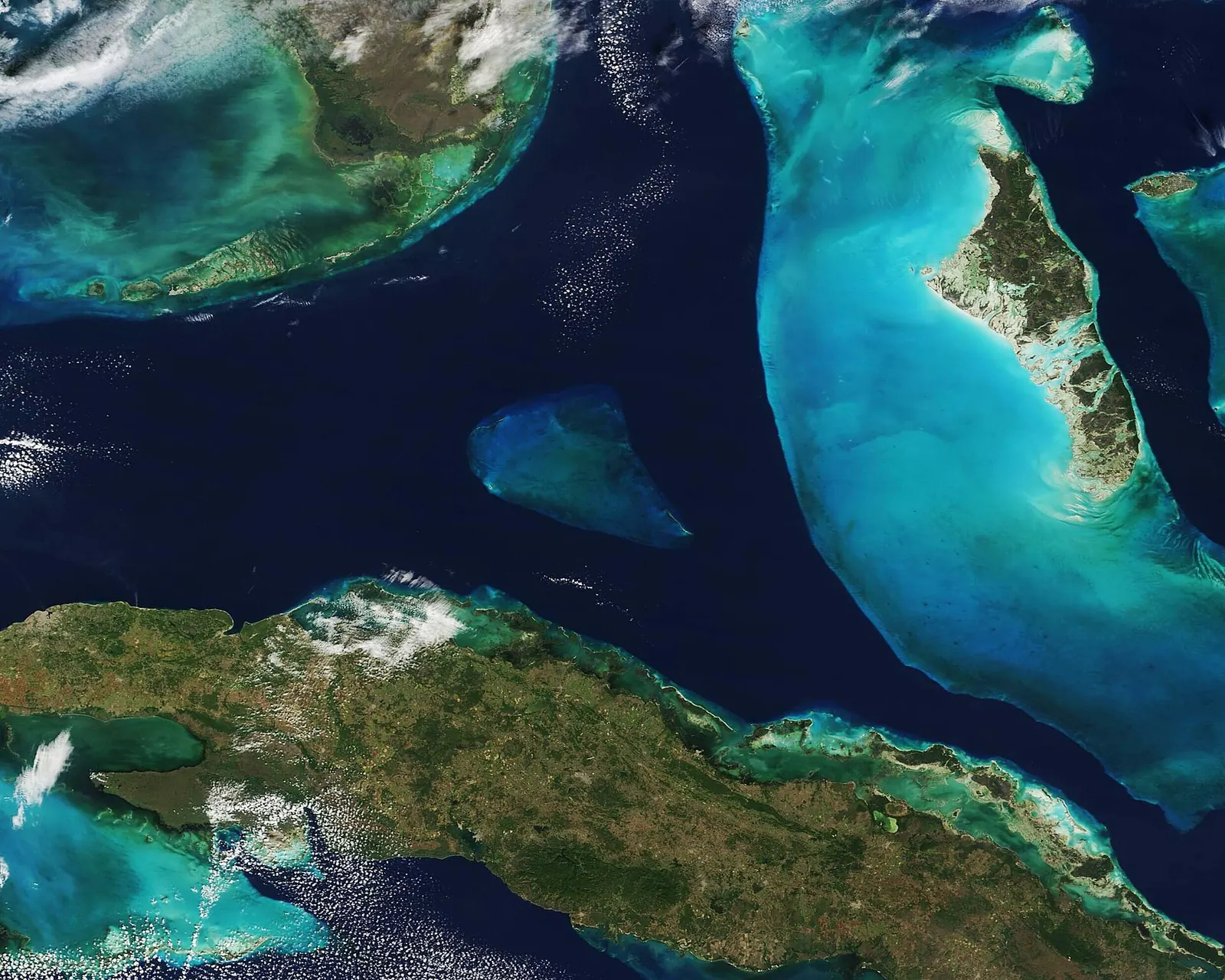

Since 1966, a Cuban who arrives in the United States and is inspected and admitted, or is granted parole, has had a path of their own, written into a statute, to become a permanent resident. They do not have to show that they are being persecuted, they do not need a relative or an employer to petition for them, and they do not wait in line for a visa. According to the Congressional Research Service (CRS), it is an opportunity that no other group or nationality has1. This is the Cuban Adjustment Act, Public Law 89-732, signed on November 2, 19662. Sixty years later it is still in force. It survived the end of the wet foot, dry foot policy and, under a 1996 law, it will be repealed only when the President of the United States determines that a democratically elected government is in power in Cuba3.
A one-page law
The law fills a single page of the Statutes at Large, the official collection of acts of Congress: a title, four sections, and the date of enactment2. Its official title is long and descriptive: "An Act to adjust the status of Cuban refugees to that of lawful permanent residents of the United States, and for other purposes." The name by which it is known does not appear in it. When Congress amended it in 2006, it referred to it as the law "commonly known as the Cuban Adjustment Act"4.
Almost everything is in section 1. In its current version it says that the status of an alien who is a native or citizen of Cuba, who has been "inspected and admitted or paroled" into the United States after January 1, 1959, and who has been physically present in the country for at least one year "may be adjusted" to that of a permanent resident, in the government's discretion, as long as the person applies, is eligible to receive an immigrant visa, and is admissible3. Once an application is approved, the date of residence is moved backward: to thirty months before the application was filed or the date of the last arrival, whichever is later. And the benefit extends to the spouse and children who live with the Cuban, "regardless of their citizenship and place of birth"3. The full text, in English, is on The text of the Act.
In 1966 the law required two years of presence. The Refugee Act of 1980 reduced it to one5.
The problem it solved
"Adjustment of status" means becoming a permanent resident without leaving the United States. The general route is section 245 of the Immigration and Nationality Act (INA). But since 1958 that section had a subsection (c) that excluded natives of countries contiguous to the United States and of "adjacent islands"6, a legal category that expressly names Cuba7. The 1965 immigration reform went further: beginning December 1, 1965, no native of a country in the Western Hemisphere could adjust status through that route8.
According to U.S. Citizenship and Immigration Services (USCIS), the law was designed so that "thousands of Cuban refugees" could become residents. Most were parolees or nonimmigrants "who could not return to Cuba for political reasons, but could not seek residence through other means"9. Parole is the discretionary, temporary permission the government grants, case by case, to enter the country without that entry counting as an admission10. That is why the law opens with a phrase that explains it all: "notwithstanding the provisions of section 245(c)"2.
The political story of how it was passed is told in The birth of the Act.
Who it covers
Two groups of people.
Natives or citizens of Cuba. USCIS reads the phrase broadly. It includes someone born in Cuba who remains Cuban, someone born in Cuba who later acquired another citizenship or became stateless, someone born at the Guantánamo naval base, someone who naturalized as a Cuban, and someone born outside Cuba to a Cuban parent who met the requirements of Cuban law to acquire that citizenship9. For this last case, USCIS does not accept the Cuban consular certificate of birth abroad as sufficient proof11.
Their spouses and children, of any nationality. A Venezuelan married to a Cuban woman, or the Mexican daughter of a Cuban man, can become a resident under this law if they meet the other requirements and live with the Cuban. "Child" here means the same as in the general immigration law: an unmarried person under twenty-one with one of the relationships that law lists (born in wedlock, a stepchild, or an adopted child, among others)7. Since 2000, a spouse or child abused by the Cuban does not need to show that they live with that person, and since 2006 the spouse keeps the right for two years after the Cuban's death or after a divorce connected to the abuse3.
The requirements, one by one, are explained in How it works.
It is not asylum or refugee status
The confusion is understandable: the title of the law speaks of "Cuban refugees," and the official statistics count its beneficiaries within the refugee category12. But legally these are three different things.
- Refugee means, under the immigration law, a person who cannot or will not return to their country because of persecution or a well-founded fear of persecution on account of race, religion, nationality, membership in a particular social group, or political opinion13. Refugee status is requested by people who are outside the United States1.
- Asylum is the protection requested from inside the country or at the border. It requires showing the same persecution or well-founded fear and, as a general rule, filing the application within one year of arrival141.
- The Adjustment Act does not ask the applicant to show any persecution. The CRS summarizes it this way: the 1966 debates make clear that those fleeing Cuba were presumed to be refugees under international law, but the law "does not use the language or definitions commonly used for refugee and asylee"1. What it requires is being Cuban (or the relative of a Cuban), having been inspected and admitted or paroled, one year of presence, admissibility, and the government's discretionary approval.
There are similarities. Refugees and asylees can also become residents after one year of physical presence (asylees, one year after being granted asylum) under section 209 of the INA15, and for them the law does not apply three grounds of inadmissibility: public charge, labor certification, and documentation requirements15. These are the same three that USCIS does not apply to people who apply for residence under the Adjustment Act11. The difference is that, for refugees, the exception is written into section 209, while the text of the Adjustment Act mentions none of the three. The public charge exception goes back to a 1967 decision, Matter of Mesa9, in which the Immigration and Naturalization Service (INS) concluded that Congress had not intended to apply that ground to these applicants16. In its July 2026 public charge rule, the Department of Homeland Security (DHS) describes it as an exemption created by Congress that continues to exist17.
Why it is unique
There have been other adjustment laws for specific nationalities. USCIS itself cites as an example Public Law 101-167, for former citizens of the Soviet Union, Laos, Cambodia, and Vietnam9. The Nicaraguan Adjustment and Central American Relief Act (NACARA) of 1997 allowed Nicaraguans and Cubans to become residents, but only those who had been in the country since December 1, 1995 and who applied before April 1, 2000, a closed group of people already present18.
The Adjustment Act has no closing date. It applies to any Cuban admitted or paroled "subsequent to January 1, 1959," with no end date, and it sets no deadline for filing3. It also needs no petitioner and does not depend on an available visa: for the general route, the regulation requires that an immigrant visa be "immediately available," and for the 1966 law it asks only for inspection and admission or parole and the year of presence19. According to the CRS, the 1976 reform exempted these adjustments from the numerical limits of the preference system. The same report sums it up: the law offers "an opportunity that no other group or nationality has"1.
It is not "wet foot, dry foot"
"Wet foot, dry foot" was a government practice, not a law. It grew out of the 1994 and 1995 migration agreements with Cuba: Cubans intercepted at sea were returned to the island unless they claimed a fear of persecution, and those who reached land were inspected and, in general, allowed to stay and adjust status under the Adjustment Act a year later, as the CRS describes it1.
The law never said anything about the manner of arrival. In practice the policy decided who got admitted or paroled; the law fixed what happened afterward.
On January 12, 2017, President Barack Obama announced that DHS was ending the policy: "Effective immediately, Cuban nationals who attempt to enter the United States illegally and do not qualify for humanitarian relief will be subject to removal"20. The Adjustment Act did not change that day. A presidential statement cannot repeal an act of Congress, and the only repeal provided for depends on the condition set in 199621. The law remains in the Code as updated through November 20263, and in fiscal year 2024 nearly 160,000 people became residents under it12.
The history of the policy is in Wet foot, dry foot and its end in The end of wet foot. What counts as parole for purposes of the law is the central question in Parole and I-220A and in much of the recent case law.
Where it is today
The Adjustment Act has no section of its own in the United States Code. The Office of the Law Revision Counsel of the House of Representatives publishes it as a note to 8 U.S.C. § 1255, which corresponds to section 245 of the INA, under the heading "Cuban Refugees: Adjustment of Status"3. Just above it appears section 606 of the Illegal Immigration Reform and Immigrant Responsibility Act (IIRIRA) of 1996, which conditions its repeal on a presidential determination, provided for in the Helms-Burton law, that a democratically elected government is in power in Cuba21. The Helms-Burton law spells out what that means: free and fair elections with international observers, respect for civil liberties and human rights, progress toward a market economy and an independent judiciary, among other requirements22. If that moment arrived, applications already pending would continue to be processed21.
The federal regulation refers to it by its date: "the Act of November 2, 1966"19. The four laws that have changed its text, and those that surround it without touching it, are explained in Amendments and related laws.
How many people have become residents under it
The DHS Yearbook of Immigration Statistics counts each year's new residents under the Adjustment Act in two classes: CU6, "Cuban refugees (P.L. 89-732 of 1966)," for Cubans, and CU7 for their non-Cuban spouses and children12.
| Fiscal year | Cubans (CU6) | Non-Cuban spouses and children (CU7) | Total | All new residents that year |
|---|---|---|---|---|
| 2022 | 13,735 | 1,747 | 15,482 | 1,018,349 |
| 2023 | 41,740 | 2,070 | 43,810 | 1,172,910 |
| 2024 | 157,370 | 2,590 | 159,960 | 1,364,090 |
Sources: Table 7 of the DHS Yearbook for 2022, 2023, and 2024232412. Beginning with the 2023 edition, DHS rounds figures to the nearest ten.
In fiscal year 2024, the Adjustment Act accounted for 11.7 percent of all permanent residences granted in the United States12. The context of those years is in The great exodus and Humanitarian parole.
We have not found an official cumulative figure since 1966. DHS publishes the data year by year, and reconstructing the full series would require collecting and adding six decades of yearbooks. As a partial reference, the CRS estimated in 2009 that about half a million Cubans had become permanent residents since fiscal year 1981, but that figure adds up all routes, not just the Adjustment Act1. The available series are in Data.
Further reading
This section of the site has seven pages: this introduction; the text of the Act, original and current; how it works today; its amendments; the parole policies and Form I-220A; the case law; and the debate over its future.
Every case depends on its facts; this page is not a substitute for advice from an immigration attorney or an accredited representative.
Notes and sources
-
Congressional Research Service, "Cuban Migration to the United States: Policy and Trends," report R40566, June 2, 2009, pages 2-4 and 14. https://www.everycrsreport.com/files/20090602_R40566_5c818df5cf6f61aac828f7e487dfe38f29f6dce4.pdf back back back back back back back
-
Public Law 89-732, 80 Stat. 1161, November 2, 1966, facsimile of the United States Statutes at Large, U.S. Government Publishing Office, govinfo. https://www.govinfo.gov/content/pkg/STATUTE-80/pdf/STATUTE-80-Pg1161.pdf back back back
-
Office of the Law Revision Counsel, "8 U.S.C. 1255: Adjustment of status of nonimmigrant to that of person admitted for permanent residence," note "Cuban Refugees: Adjustment of Status," text current through Public Law 119-138 (November 3, 2026), accessed November 11, 2026. https://uscode.house.gov/us/usc/t8/s1255/ back back back back back back back
-
Public Law 109-162 (Violence Against Women and Department of Justice Reauthorization Act of 2005), January 5, 2006, section 823(a), 119 Stat. 3063. https://www.govinfo.gov/content/pkg/PLAW-109publ162/html/PLAW-109publ162.htm back
-
Public Law 96-212 (Refugee Act of 1980), 94 Stat. 102, March 17, 1980, section 203(i), page 108. https://www.govinfo.gov/content/pkg/STATUTE-94/pdf/STATUTE-94-Pg102.pdf back
-
Public Law 85-700, 72 Stat. 699, August 21, 1958, section 1 (new section 245(c)). https://www.govinfo.gov/link/statute/72/699 back
-
Office of the Law Revision Counsel, "8 U.S.C. 1101: Definitions," subsections (b)(1) and (b)(5), accessed November 11, 2026. https://uscode.house.gov/us/usc/t8/s1101/ back back
-
Public Law 89-236, 79 Stat. 911, October 3, 1965, sections 13(b) and 20. https://www.govinfo.gov/content/pkg/STATUTE-79/pdf/STATUTE-79-Pg911.pdf back
-
U.S. Citizenship and Immigration Services, Adjudicator's Field Manual, chapter 23.11, "Cuban Adjustment Act Cases," subsections (a), (b), and (f), accessed November 11, 2026. https://www.uscis.gov/sites/default/files/document/policy-manual-afm/afm23-external.pdf back back back back
-
Office of the Law Revision Counsel, "8 U.S.C. 1182: Inadmissible aliens," subsection (d)(5)(A), accessed November 11, 2026. https://uscode.house.gov/us/usc/t8/s1182/ back
-
U.S. Citizenship and Immigration Services, "Green Card for a Cuban Native or Citizen," last reviewed July 8, 2025, accessed from the web.archive.org copy of November 11, 2026. https://www.uscis.gov/green-card/green-card-eligibility/green-card-for-a-cuban-native-or-citizen back back
-
Department of Homeland Security, Office of Homeland Security Statistics, Yearbook of Immigration Statistics 2024, table 7, "Persons Obtaining Lawful Permanent Resident Status by Type and Detailed Class of Admission: Fiscal Year 2024." https://ohss.dhs.gov/topics/immigration/yearbook/2024/table7 back back back back back
-
Office of the Law Revision Counsel, "8 U.S.C. 1101: Definitions," subsection (a)(42), accessed November 11, 2026. https://uscode.house.gov/us/usc/t8/s1101/ back
-
Office of the Law Revision Counsel, "8 U.S.C. 1158: Asylum," subsection (a)(2)(B), accessed November 11, 2026. https://uscode.house.gov/us/usc/t8/s1158/ back
-
Office of the Law Revision Counsel, "8 U.S.C. 1159: Adjustment of status of refugees," subsections (a), (b), and (c), accessed November 11, 2026. https://uscode.house.gov/us/usc/t8/s1159/ back back
-
Matter of Mesa, 12 I&N Dec. 432 (Deputy Associate Commissioner, September 6, 1967), Interim Decision 1788, pages 437-438, Executive Office for Immigration Review. https://www.justice.gov/eoir/vll/intdec/vol12/1788.pdf back
-
Department of Homeland Security, "Public Charge Ground of Inadmissibility," final rule, 91 Fed. Reg. 45324, July 20, 2026, effective September 18, 2026, section "Certain Cubans and Haitians" and amendment removing 8 CFR §§ 212.20 through 212.23. https://www.federalregister.gov/documents/2026/07/20/2026-14539/public-charge-ground-of-inadmissibility back
-
Public Law 105-100, November 19, 1997, title II (Nicaraguan Adjustment and Central American Relief Act), section 202, 111 Stat. 2193. https://www.govinfo.gov/content/pkg/PLAW-105publ100/html/PLAW-105publ100.htm back
-
Code of Federal Regulations, title 8, § 245.2(a)(2), 2025 annual edition; text unchanged in the eCFR as of November 9, 2026. https://www.govinfo.gov/content/pkg/CFR-2025-title8-vol1/xml/CFR-2025-title8-vol1-sec245-2.xml back back
-
The White House, "Statement by the President on Cuban Immigration Policy," January 12, 2017, Obama White House archive. https://obamawhitehouse.archives.gov/the-press-office/2017/01/12/statement-president-cuban-immigration-policy back
-
Public Law 104-208, September 30, 1996, division C (Illegal Immigration Reform and Immigrant Responsibility Act of 1996), title VI, section 606, 110 Stat. 3009-695. https://www.govinfo.gov/content/pkg/PLAW-104publ208/html/PLAW-104publ208.htm back back back
-
Public Law 104-114 (Cuban Liberty and Democratic Solidarity (LIBERTAD) Act of 1996), March 12, 1996, sections 203(c)(3) and 206. https://www.govinfo.gov/content/pkg/PLAW-104publ114/html/PLAW-104publ114.htm back
-
Department of Homeland Security, Office of Homeland Security Statistics, Yearbook of Immigration Statistics 2022, table 7. https://ohss.dhs.gov/topics/immigration/yearbook/2022/table7 back
-
Department of Homeland Security, Office of Homeland Security Statistics, Yearbook of Immigration Statistics 2023, table 7. https://ohss.dhs.gov/topics/immigration/yearbook/2023/table7 back