1995-2016
Wet Foot, Dry Foot
Two decades in which touching land decided everything
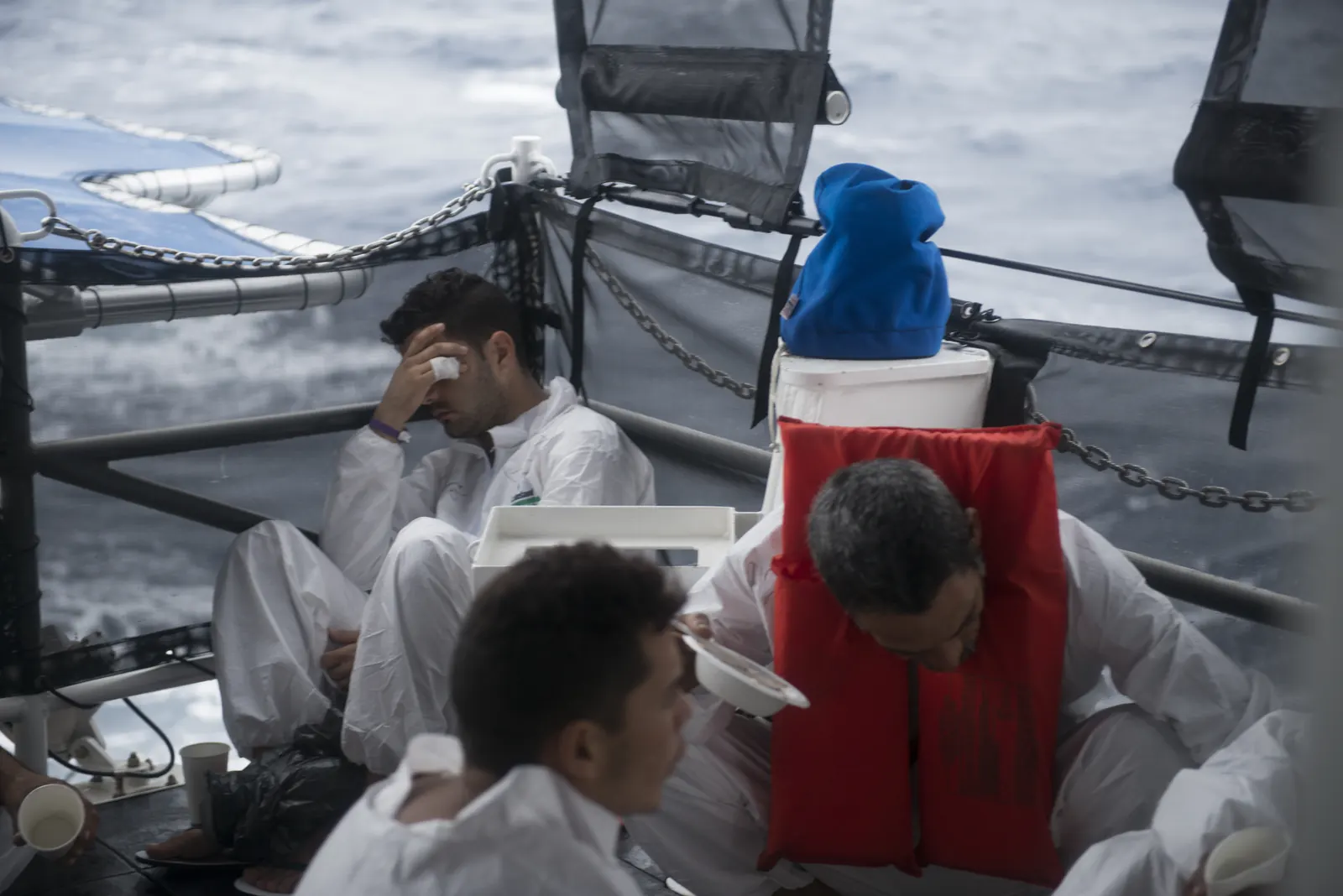

Between May 1995 and January 2017, the fate of a Cuban who left the island by sea was decided at the line where the water ends. If the U.S. Coast Guard intercepted him before he arrived, even within sight of the beach, it sent him back to Cuba. If he managed to set foot on land, the authorities inspected him and usually let him stay; a year later he could apply for permanent residence under the Cuban Adjustment Act1. That rule was never voted on in Congress. It grew out of an agreement between two governments, was applied as an administrative practice, and acquired a street name: "wet foot, dry foot."
An agreement, not a law
The policy came out of the 1994 rafter crisis. The agreement signed on September 9 of that year committed the United States to admit at least 20,000 Cuban immigrants a year, not counting immediate relatives of U.S. citizens, and not to let in those intercepted at sea, who would be taken to camps in a third location1. In May 1995 some 33,000 Cubans were still held at the Guantánamo Bay naval base1.
On May 2, 1995, the White House released a Joint Statement that settled both matters at once. The Cubans at Guantánamo would be allowed to enter the United States on humanitarian parole, a discretionary permission to be in the country without a formal admission, and up to 5,000 of those permits a year would be counted against the figure of 20,000. In exchange, the sea stopped being a way in:
"Effective immediately, Cuban migrants intercepted at sea by the United States and attempting to enter the United States will be taken to Cuba." Joint Statement of the United States and Cuba, May 2, 19952
Both governments promised that no one would face reprisals for having tried to emigrate, and U.S. officials would inform those returned about how to apply for legal entry at the U.S. Interests Section in Havana2. In January 1996, the Department of Defense announced that the last of some 32,000 Cubans housed at Guantánamo had left the base, most of them for the United States3.
None of this was written into law. The Congressional Research Service (CRS) described it as a "practice" that took shape out of the agreements and the interdiction policy: those who did not reach the shore were returned unless they expressed a credible fear of persecution; those who did were inspected and, in general, stayed and adjusted status the following year1. Those who did show such fear were not sent to the United States but to other countries: between May 1995 and July 2003, about 170 were resettled in eleven nations, among them Spain, Venezuela, Australia and Nicaragua1.
The piece that connected the shore to residence was parole. The Adjustment Act requires that the Cuban have been inspected and admitted or paroled, and have been in the country at least one year4. Someone who touched land without a visa did not receive a formal admission but usually received parole, and with it met the requirement5. In April 1999, Immigration and Naturalization Service (INS) Commissioner Doris Meissner put in writing that arriving somewhere other than a port of entry did not bar adjustment as long as the person turned himself in to the authorities, and that in such cases the balance should generally tip in favor of granting parole6. When the government extended expedited removal (deportation without a hearing before a judge) in 2002 and 2004 to people arriving by sea or detained near the border, it expressly left Cubans out7. Years later, the statement that ended all this called it by its technical name: a "special parole policy for Cuban nationals who reach the territory of the United States," commonly referred to as the wet foot-dry foot policy8. The requirements of the law are explained in How It Works.

The visa lottery
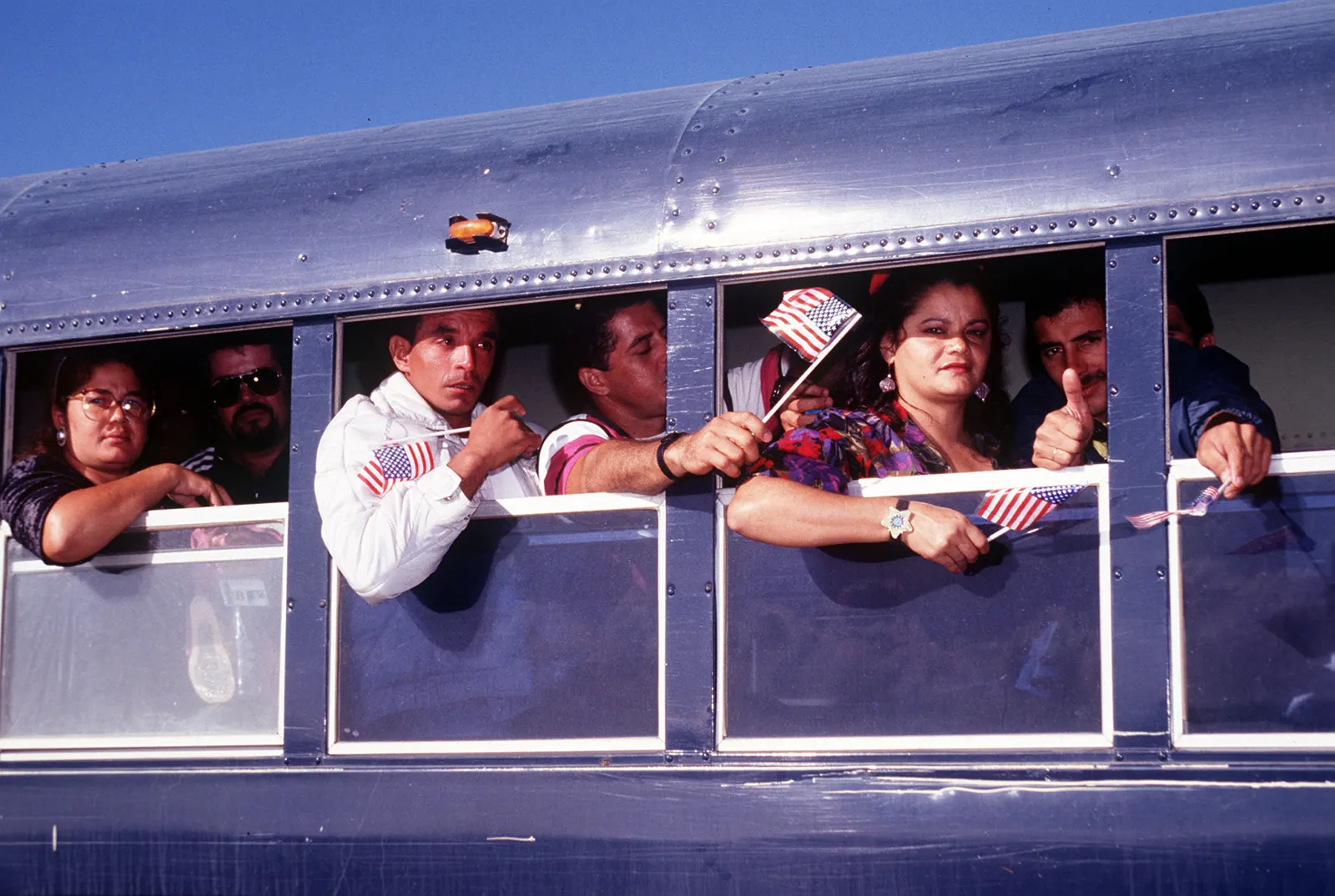
The 1994 agreement left an arithmetic problem. Few Cubans could emigrate through ordinary channels, because almost no one had the family relationship or job qualification the quotas require, so Washington also turned to parole to reach 20,0001. To decide who would get it, it created the Special Cuban Migration Program, a lottery. Cubans aged 18 to 55 who answered "yes" to two of three questions could register: whether they had completed high school or a higher level, whether they had at least three years of work experience, and whether they had relatives in the United States. Those selected received parole and could travel with a spouse and minor children1.
There were three registrations, in fiscal years 1994, 1996 and 1998, and each drew more people than the last: 189,000 valid registrants in the first, 433,000 in the second and 541,000 in the third1. After that there were no more. According to U.S. Citizenship and Immigration Services (USCIS), the Cuban government did not allow another registration after 1998, and that was one of the reasons another program was created in 20079. A Cato Institute tally estimates that some 75,000 Cubans received parole through the programs derived from the agreement between 1994 and 200310. CRS also recorded complaints from those selected about very expensive medical exams, fees for the exit permit and reprisals against relatives who stayed behind1.
1996: two planes and a clause
On February 24, 1996, Cuban Air Force MiG fighters shot down two Brothers to the Rescue planes. The Miami organization had flown over the Straits of Florida since 1991 searching for rafters. All four crew members were killed; a third plane escaped11. The Cuban government accused the organization of covert operations against the island. Congress rejected that version in the text of the law it passed weeks later, placed the first shootdown some 18 miles from the Cuban coast and condemned what it called an "act of terrorism"11.
That law was the Cuban Liberty and Democratic Solidarity (LIBERTAD) Act, known as the Helms-Burton Act12, which President Bill Clinton signed on March 12, 199611. According to CRS, it passed in the wake of the shootdown and its most lasting effect was to turn the embargo into permanent law13. Its section 206 defined what would count as a "democratically elected government" in Cuba: one that emerged from free and fair elections with international observers, respects civil liberties, is moving toward a market economy, has an independent judiciary and has made progress on returning or compensating property confiscated from Americans, among other requirements11.
The clause that ties the Adjustment Act to that moment, however, is not in Helms-Burton but in another law of the same year: the Illegal Immigration Reform and Immigrant Responsibility Act (IIRIRA), signed on September 30, 1996. Its section 606, titled "Conditional Repeal of Cuban Adjustment Act," provides that Public Law 89-732 "is repealed effective only upon a determination by the President under section 203(c)(3) of the Cuban Liberty and Democratic Solidarity (LIBERTAD) Act of 1996 (Public Law 104-114) that a democratically elected government in Cuba is in power." The repeal would not reach anyone with an adjustment application pending on that date14. The two laws were thus linked: the 1996 law on Cuba sets the requirements, and the immigration law says what happens to the Adjustment Act when they are met. That story continues in Amendments and Related Laws.

The shore
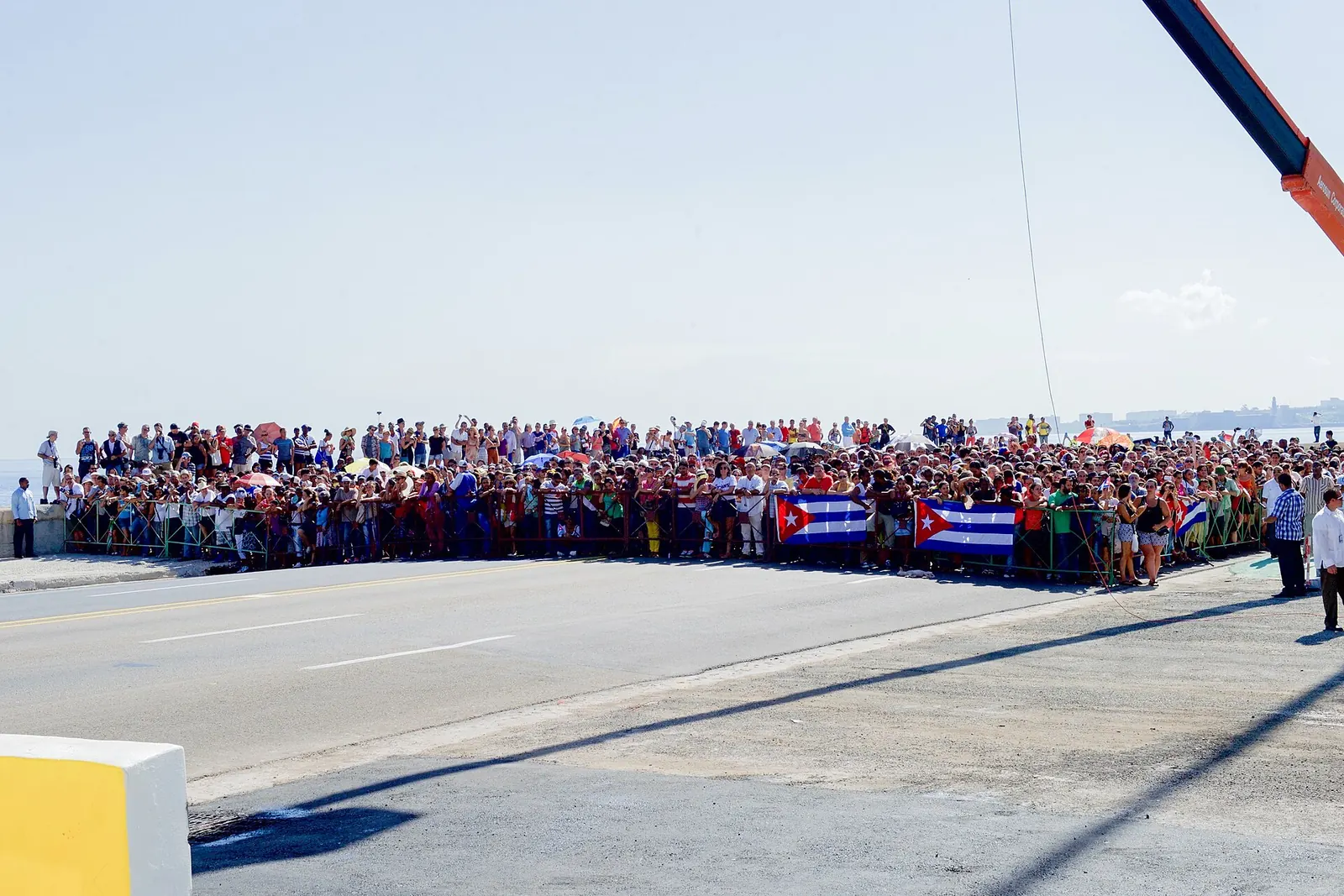
Interceptions of Cubans were few at first: 411 in fiscal year 1996 and 421 in 1997, according to the Coast Guard. They rose to 903 in 1998 and 1,619 in 1999; after dropping to 666 in 2002, they climbed to 2,868 in 2007, the highest in twelve years1. The line between water and sand produced scenes the country watched on television. In June 1999, the Coast Guard used pepper spray and a water cannon to keep six Cubans from reaching the beach at Surfside, Florida; weeks later, a woman drowned when a boat capsized during an interception1.
On November 25, 1999, Thanksgiving Day, fishermen found a five-year-old Cuban boy clinging to an inner tube three miles off Fort Lauderdale. His name was Elián González. His mother had died in the shipwreck15. The boy and two other survivors were taken ashore rather than returned to Cuba, which is what the agreements provided, and the attorney general granted him parole and left him in the care of relatives in Miami116. Seven months of struggle followed. His father, who lived in Cuba, demanded his return; the Miami relatives applied for asylum on the boy's behalf. On January 5, 2000, the INS decided that the father was the one with authority to speak for him in immigration matters15. In the early hours of April 22, federal agents sent by Attorney General Janet Reno removed Elián from his relatives' house and reunited him with his father1. On June 1, the Eleventh Circuit Court of Appeals held that the asylum application could not go forward against the father's wishes, and on June 28, when the Supreme Court declined to review the case, the boy returned to Cuba that same afternoon16.
In April 2003, the Cuban government executed three men who had hijacked a passenger ferry in Havana to reach the United States; the trials were summary and held behind closed doors, and the executions were condemned by Amnesty International, Human Rights Watch, Mexico and the European Union, among others1. In July, according to information gathered by CRS, twelve people stole a boat in Cuba and took three marina guards hostage; when Havana offered to sentence them to ten years in prison, Washington agreed to return them1. That same month, the Coast Guard intercepted about 60 kilometers south of Key West a 1951 Chevrolet truck lashed to oil drums, with twelve Cubans aboard. It returned them to Cuba and sank the truck17. In February 2004, four of them tried again in a 1959 Buick converted into a boat, with eleven people aboard, five of them children; they too were intercepted18.
The rule was applied to the letter. On January 5, 2006, the Coast Guard found fifteen Cubans, among them four women and two children, on an old bridge in the Florida Keys that was no longer connected to land. The bridge was not considered U.S. soil: all fifteen were treated as "wet foot" and repatriated1. By then, the twice-yearly migration talks that the agreements called for had been suspended. The State Department canceled the January 2004 round because, it said, Cuba refused to discuss matters such as exit permits or a new registration for the lottery1.
Speedboats
Policing the strait fed another business: smuggling people in speedboats. In November 2001, the Miami Herald reported that at least 144 people had been convicted of migrant smuggling since 1998, most of them for trips across the strait, and that smugglers charged between $8,000 and $10,000 per person19. Five years later, The Christian Science Monitor cited the same fees and told of chases that ended with people injured and killed20. CRS recorded reports of payments of up to $15,000 and the allegation that some migrants used federal refugee assistance to pay smugglers, although that assistance was paid in small monthly installments rather than all at once1. Interceptions fell after 2007; CRS attributed this to the U.S. recession, more effective patrolling and tougher prosecution of smugglers in both countries3.
The Mexico detour
Other Cubans looked for a route that would avoid the Coast Guard. They sailed toward the Yucatán Peninsula, landed on the coast of Quintana Roo, about 120 miles from Cuba, and crossed Mexico by land to the Texas border. In October 2007, the Mexican newspaper La Jornada described Mexico as the main route of irregular Cuban migration to the United States1.
The advantage lay in the treatment they received on arrival. A Cuban who presented himself at a land port of entry was inspected even without documents, could not be subjected to expedited removal and generally received parole1. That is why, unlike other migrants, Cubans sought out the agents instead of hiding from them. In fiscal year 2007, U.S. Customs and Border Protection (CBP) recorded 13,019 undocumented Cubans at ports of entry, most of them at the Laredo office, and the Border Patrol detained another 4,295 between ports, mostly in coastal areas1. In October 2008, the Cuban foreign minister announced that Mexico would begin repatriating Cubans, and from November 20 the Mexican Navy added the interception and return of Cubans to its patrols1. The land route, however, did not close: the Cato Institute estimates that between 2004 and 2016 some 226,000 Cubans received parole at the land borders10.
Doctors and families
The administration of George W. Bush opened two more channels. On August 11, 2006, the Department of Homeland Security (DHS) announced the Cuban Medical Professional Parole (CMPP), a parole program for Cuban health professionals. Doctors and other health professionals whom the Cuban government had sent to study or work in a third country could apply, at a USCIS office or a U.S. embassy or consulate in that country, and so could their immediate family421. According to Reuters, 7,117 applications had been approved by January 2016, with an annual peak of 1,663 in fiscal year 201522. In fiscal year 2016, applications reached 3,907, and 86% received parole, according to data cited by NBC News23.
On November 21, 2007, USCIS published the Cuban Family Reunification Parole (CFRP). It offered relatives in Cuba of citizens and permanent residents who had an approved family petition (Form I-130) but still no visa available because of the quotas the chance to travel earlier on parole. Immediate relatives of citizens were left out because they do not wait in line. The stated goal was to fulfill the migration agreements and discourage sea voyages9. Over the years, the program became the pillar of that commitment: about 75% of the travel documents for Cuban immigrants were issued through it, according to CRS24.
2013: the end of the white card
The most important change on the Cuban side came by decree. Decree-Law 302, published in Official Gazette No. 44 of October 16, 2012, amended the Migration Law and took effect on January 14, 201325. It abolished the exit permit, the so-called "white card," and the letter of invitation; from that date a passport and the visa of the destination country were enough2526. The decree did keep, however, the article that allows a passport to be denied, among other reasons, "when reasons of National Defense and Security so advise" (translated from Spanish)26. That same year, the United States began granting Cubans five-year, multiple-entry visitor visas3.
A new route opened in those years. Ecuador did not require a visa of Cubans, and thousands began flying there to cross Colombia, Central America and Mexico overland afterward, a journey through eight countries that took almost a month27. According to the State Department, by fiscal year 2013 Cubans without visas began to prefer land routes, especially the ports of entry from Mexico3.
The race against the clock
At noon on December 17, 2014, President Barack Obama announced from the White House that the United States would change its relationship with the people of Cuba, in what he called the most significant changes in U.S. policy in more than fifty years, and closed his remarks with a sentence in Spanish: "Todos somos americanos"28. On July 20, 2015, the two countries restored diplomatic relations8.
For many Cubans, the thaw had an immediate reading: if relations were normalized, the special treatment might end. DHS later acknowledged this in writing, attributing the rise in attempted entries to "the perception" that there was a limited window before the United States would eliminate favorable policies for Cubans7. The figures for arrivals without a visa reflect it:
| Fiscal year | At ports of entry | Between ports | Total |
|---|---|---|---|
| 2012 | 12,048 | 606 | 12,654 |
| 2013 | 17,360 | 624 | 17,984 |
| 2014 | 23,751 | 1,061 | 24,812 |
| 2015 | 40,119 | 1,153 | 41,272 |
| 2016 | 56,340 | 1,930 | 58,270 |
Source: CBP and the State Department, compiled by CRS3.
The Pew Research Center, using a different CBP series, gives somewhat higher figures for ports of entry: 24,278 in fiscal year 2014, 43,159 in 2015 and 56,406 in 2016. Two of every three Cubans who arrived in 2015, 28,371 people, entered through the Laredo sector in Texas29.
Stranded in Central America
The funnel closed at Nicaragua. In mid-November 2015, after Costa Rica issued transit permits to a group of Cubans who had arrived from Panama, the government of Daniel Ortega sent soldiers to the border and sent back to Costa Rica some 1,100 people, accusing its neighbor of a "violation of sovereignty" (translated from Spanish)30. The route was blocked. By mid-December more than 5,000 Cubans were stranded in Costa Rica, and by the end of the month the number was estimated at about 8,0003132. On December 18, Costa Rica suspended its political participation in the Central American Integration System (SICA) because its partners refused to discuss the crisis, and stopped issuing transit visas3132. Ecuador, the point of departure, began requiring visas of Cubans that same month, and since then many left through Guyana33.
The way out was an airlift. The Central American governments and Mexico, with the International Organization for Migration (IOM), agreed on a pilot plan32, and in mid-January 2016 a first chartered flight carried 180 Cubans from Liberia, Costa Rica, to El Salvador; from there they continued overland toward southern Mexico34. Others were stuck longer in Panama: in April 2016, hundreds were still waiting in an abandoned hotel in Paso Canoas33.
The last wave
In the strait, fiscal year 2016 saw the most interceptions since the agreements: between 5,213 and 5,263 Cubans, according to CRS (5,213 in its 2016 report and 5,230 in later ones) and Pew (5,263), compared with about 3,500 in 20155329. The Coast Guard's own series, the one used on the data page, gives 2,927 for 2015 and 5,396 for 2016: the sources use different cutoffs and categories. Coast Guard Commandant Admiral Paul Zukunft spoke in November 2016 of 7,361 Cubans detained trying to enter by sea, a broader figure whose categories the sources consulted do not detail. He also said that some sought "dry foot" status by landing on Mona Island, in the Puerto Rico archipelago, or by injuring themselves to force a medical evacuation35.
In January 2016, according to Reuters, the White House was considering ending the program for doctors22. Fidel Castro died in November of that year5. On January 12, 2017, eight days before leaving office, Obama ended the wet foot, dry foot policy. What happened then is told in The End of "Wet Foot, Dry Foot".
Notes and sources
-
Ruth Ellen Wasem, "Cuban Migration to the United States: Policy and Trends," Congressional Research Service (CRS), report R40566, June 2, 2009, pp. 1-19. https://www.everycrsreport.com/files/20090602_R40566_5c818df5cf6f61aac828f7e487dfe38f29f6dce4.pdf back back back back back back back back back back back back back back back back back back back back back back
-
White House, Office of the Press Secretary, "Joint Statement," May 2, 1995 (Clinton administration archive). https://clintonwhitehouse6.archives.gov/1995/05/1995-05-02-joint-us-cuban-statement-on-migration.html back back
-
Mark P. Sullivan, "Cuba: U.S. Policy in the 115th Congress," CRS, report R44822, updated September 1, 2018, pp. 40-61 (table 1, "Undocumented Cuban Migrants, FY2010-FY2018"). https://www.congress.gov/crs_external_products/R/PDF/R44822/R44822.20.pdf back back back back back back
-
Department of Homeland Security (DHS), "Fact Sheet: Changes to Parole and Expedited Removal Policies Affecting Cuban Nationals," January 12, 2017 (archived copy). https://web.archive.org/web/20171019175128/https://www.dhs.gov/sites/default/files/publications/DHS%20Fact%20Sheet%20FINAL.pdf back back
-
Andorra Bruno, "U.S. Policy on Cuban Migrants: In Brief," CRS, report R44714, December 16, 2016. https://www.everycrsreport.com/reports/R44714.html back back back
-
Doris Meissner, INS Commissioner, "Eligibility for Permanent Residence Under the Cuban Adjustment Act Despite Having Arrived at a Place Other than a Designated Port-of-Entry," 1999 memorandum, reproduced by the American Immigration Lawyers Association (AILA), document 99043080, published April 30, 1999. https://www.aila.org/library/ins-policy-memo-on-cuban-adjustment back
-
DHS, "Eliminating Exception To Expedited Removal Authority for Cuban Nationals Encountered in the United States or Arriving by Sea," Federal Register, vol. 82, pp. 4902-4905, January 17, 2017. https://www.federalregister.gov/documents/2017/01/17/2017-00914/eliminating-exception-to-expedited-removal-authority-for-cuban-nationals-encountered-in-the-united back back
-
Department of State, "Migration and Refugees: Joint Statement Between the United States of America and Cuba, Signed at Havana January 12, 2017," Treaties and Other International Acts Series 17-112, texts in English and Spanish. https://www.govinfo.gov/content/pkg/GOVPUB-S-PURL-gpo78151/pdf/GOVPUB-S-PURL-gpo78151.pdf back back
-
USCIS, "Cuban Family Reunification Parole Program," Federal Register, vol. 72, p. 65588, November 21, 2007. https://www.federalregister.gov/documents/2007/11/21/E7-22679/cuban-family-reunification-parole-program back back
-
David J. Bier, Cato Institute, written testimony before the Subcommittees on Oversight and on Border Security of the House Committee on Homeland Security, published on congress.gov, pp. 3-4. https://www.congress.gov/119/meeting/house/118454/witnesses/HHRG-119-HM09-Wstate-BierD-20250715.pdf back back
-
Cuban Liberty and Democratic Solidarity (LIBERTAD) Act of 1996, Pub. L. 104-114, 110 Stat. 785, enacted March 12, 1996, sections 116 and 206. https://www.govinfo.gov/content/pkg/PLAW-104publ114/html/PLAW-104publ114.htm back back back back
-
Guadalupe Correa-Cabrera and Elliot Spagat, "U.S. Immigration Policy for Cubans: From Revolution to COVID-19," Wilson Center, Latin American Program, October 2020, p. 18. https://www.wilsoncenter.org/sites/default/files/media/uploads/documents/FINAL%20U.S.%20IMMIGRATION%20POLICY%20FOR%20CUBANS-%20FROM%20REVOLUTION%20TO%20COVID-19_0.pdf back
-
Mark P. Sullivan, "Cuba: U.S. Policy in the 115th Congress," CRS, report R44822, April 21, 2017 version. https://www.everycrsreport.com/files/20170421_R44822_40e4d596a3fdab20eec3beb28e3e0ae60f16443d.pdf back
-
Illegal Immigration Reform and Immigrant Responsibility Act of 1996, Pub. L. 104-208, division C, section 606, 110 Stat. 3009-695, September 30, 1996. https://www.govinfo.gov/content/pkg/PLAW-104publ208/html/PLAW-104publ208.htm back
-
PBS Frontline, "A Chronology Of The Elian Gonzalez Saga," series Saving Elian. https://www.pbs.org/wgbh/pages/frontline/shows/elian/etc/eliancron.html back back
-
Larry M. Eig, "The Case of Elian Gonzalez: Legal Basics," CRS, report RS20450, updated September 12, 2000. https://stuff.mit.edu/afs/sipb.mit.edu/contrib/wikileaks-crs/wikileaks-crs-reports/RS20450.pdf back back
-
Voice of America, "US Repatriates 12 Cubans Picked Up in Strange Floating Vessel," July 24, 2003. https://www.voanews.com/a/a-13-a-2003-07-24-37-us-67468352/385937.html back
-
Reuters, "Cubans sailing vintage car caught off Florida," published by NBC News, February 4, 2004. https://www.nbcnews.com/news/amp/wbna4163593 back
-
Jay Weaver, "Smuggling more prevalent, and deadly," The Miami Herald, November 21, 2001, reproduced by LatinAmericanStudies.org. https://www.latinamericanstudies.org/immigration/cuba-smugglers.htm back
-
Warren Richey, "As Castro heals, Cuba's people smugglers get back to business," The Christian Science Monitor, August 18, 2006. https://www.csmonitor.com/2006/0818/p02s01-woam.html back
-
USCIS, "Cuban Medical Professional Parole (CMPP) Program," accessed November 11, 2026. https://www.uscis.gov/humanitarian/humanitarian-parole/cuban-medical-professional-parole-cmpp-program back
-
Jeff Mason and Daniel Trotta, "Exclusive: U.S. considers ending program that lures Cuban doctors to defect," Reuters, January 8, 2016, reproduced by Yahoo News. https://sg.news.yahoo.com/exclusive-u-considers-ending-program-lures-cuban-doctors-183156245.html back back
-
Carmen Sesin, "Cuban Doctors Stranded: Can't Travel to US, Cuba, or Stay in Colombia," NBC News, February 20, 2017. https://www.nbcnews.com/news/latino/cuban-doctors-stranded-can-t-travel-us-cuba-or-stay-n720491 back
-
Mark P. Sullivan, "Cuba: U.S. Policy in the 116th Congress and Through the Trump Administration," CRS, report R45657, updated January 22, 2021, p. 54. https://www.everycrsreport.com/files/2021-01-22_R45657_fad0487b6ec228d765afe4efa0a73ca16f17a02c.pdf back
-
"Reforma migratoria en Cuba: reacciones esperadas" [Migration reform in Cuba: expected reactions], OnCuba News, October 21, 2012. https://oncubanews.com/cuba/reforma-migratoria-en-cuba-reacciones-esperadas back back
-
"Adiós “a la cubana”" [Goodbye, Cuban style], CNN en Español, January 15, 2013. https://cnnespanol.cnn.com/2013/01/15/adios-a-la-cubana back back
-
BBC Mundo, "Balseros en tierra firme: la odisea de los miles de cubanos que atraviesan 8 países para llegar a EE.UU." [Rafters on dry land: the odyssey of the thousands of Cubans crossing 8 countries to reach the U.S.], November 20, 2015. https://www.bbc.com/mundo/noticias/2015/11/151120_mexico_migracion_cubanos_odisea_balseros_jp back
-
White House, "Statement by the President on Cuba Policy Changes," December 17, 2014. https://obamawhitehouse.archives.gov/the-press-office/2014/12/17/statement-president-cuba-policy-changes back
-
Jens Manuel Krogstad, "Cuban immigration to U.S. surges as relations warm," Pew Research Center, January 13, 2017 (updated version of an article from October 7, 2015). https://www.pewresearch.org/short-reads/2017/01/13/cuban-immigration-to-u-s-surges-as-relations-warm/ back back
-
Carlos S. Maldonado, "Nicaragua expulsa a Costa Rica a 1.100 migrantes cubanos" [Nicaragua expels 1,100 Cuban migrants to Costa Rica], El País, November 17, 2015. https://elpais.com/internacional/2015/11/17/mexico/1447730640_203194.html back
-
BBC Mundo, "Costa Rica suspende su participación política en el SICA por negativa a discutir la crisis de los cubanos" [Costa Rica suspends its political participation in SICA over refusal to discuss the Cuban crisis], December 19, 2015. https://www.bbc.com/mundo/noticias/2015/12/151218_costa_rica_cubanos_migrantes_ab back back
-
BBC Mundo, "Centroamericanos pactan plan piloto para trasladar a México a los cubanos varados" [Central Americans agree on a pilot plan to move stranded Cubans to Mexico], December 29, 2015. https://www.bbc.com/mundo/noticias/2015/12/151228_cubanos_centroamerica_sica_plan_piloto_az back back back
-
Juan Paullier, "La incertidumbre de los cientos de cubanos que llevan meses varados en un hotel abandonado en Panamá" [The uncertainty of the hundreds of Cubans stranded for months in an abandoned hotel in Panama], BBC Mundo, April 27, 2016. https://www.bbc.com/mundo/noticias/2016/04/160426_panama_cubanos_varados_paso_canoas_eeuu_jp back back
-
AFP, "Primer grupo de cubanos varados en Costa Rica reanuda viaje a EU" [First group of Cubans stranded in Costa Rica resumes journey to the U.S.], La Prensa (Panama), January 12, 2016. https://www.prensa.com/mundo/Primer-cubanos-Costa-Rica-EU_0_4390811021.html back
-
Hope Hodge Seck, "Coast Guard Apprehends Most Cuban Migrants in Decade," Military.com, November 30, 2016. https://www.military.com/daily-news/2016/11/29/coast-guard-apprehends-most-cuban-migrants-in-decade.html back