1980
The Mariel Exodus
One hundred twenty-five thousand people in six months

The Mariel crisis began with a bus. On April 1, 1980, six Cubans drove a vehicle into the gate of the Peruvian embassy in Havana. Police guards opened fire, and one of their bullets, according to an account from the U.S. National Archives, ricocheted off the bus and killed a Cuban officer1. Fidel Castro demanded that the embassy hand over the occupants for trial; Peru refused, and the Cuban government withdrew the police guard from the compound1. Within days some 10,800 people crowded into the embassy grounds asking to leave the country23. Six months later about 125,000 Cubans had crossed the Straits of Florida, the largest migration of Cubans to the United States in a single episode1.
Ten thousand people in a garden
What happened at the embassy did not come out of nowhere. In 1979 other groups had already forced their way into the Venezuelan embassy, and on May 13 of that year a bus had rammed that compound1. At the same time, the rapprochement between Washington and Havana in the late 1970s, with interests sections opened in 1977 and the release of political prisoners described in the previous chapter, had opened some cracks1. In April 1980 the White House noted that over the previous year and a half Cuba had released more than 3,900 political prisoners, and that a Carter program would bring more than 10,000 of them and their families to the United States3.
On April 5 Cuba announced that the asylum seekers were free to leave the country2. On April 9, a National Security Council committee described between 3,000 and 11,000 Cubans packed into the embassy grounds, with sanitary conditions worsening daily2. On April 14 the White House spoke of "the 10,800 Cubans who are seeking asylum in the Peruvian Embassy in Havana," backed an airlift to Costa Rica, and announced that under the newly passed Refugee Act (signed on March 17, 1980) the United States would admit "up to 3,500" of them34.

"Let them go": the port of Mariel
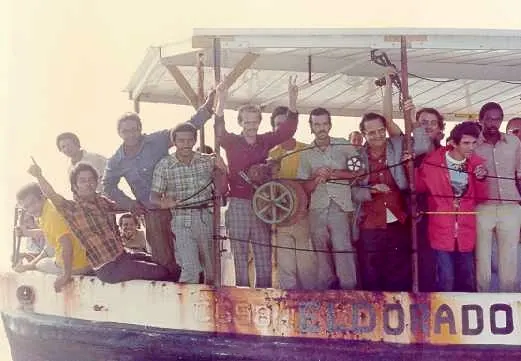
On April 20, 1980, Castro declared that the port of Mariel, west of Havana, was open to anyone who wanted to leave, as long as someone came to pick them up1. In his speeches he called those leaving "parasites"; the official newspaper Granma called them "antisocialists," "bums," and "gusanos" (the Spanish word for worms), and the Committees for the Defense of the Revolution led chants of "¡Que se vayan!" ("Let them go!") outside embassies, according to the National Archives account1. In another speech from those days he described them as "lumpen," which NPR renders in English as "scum" (translated from Spanish)5.
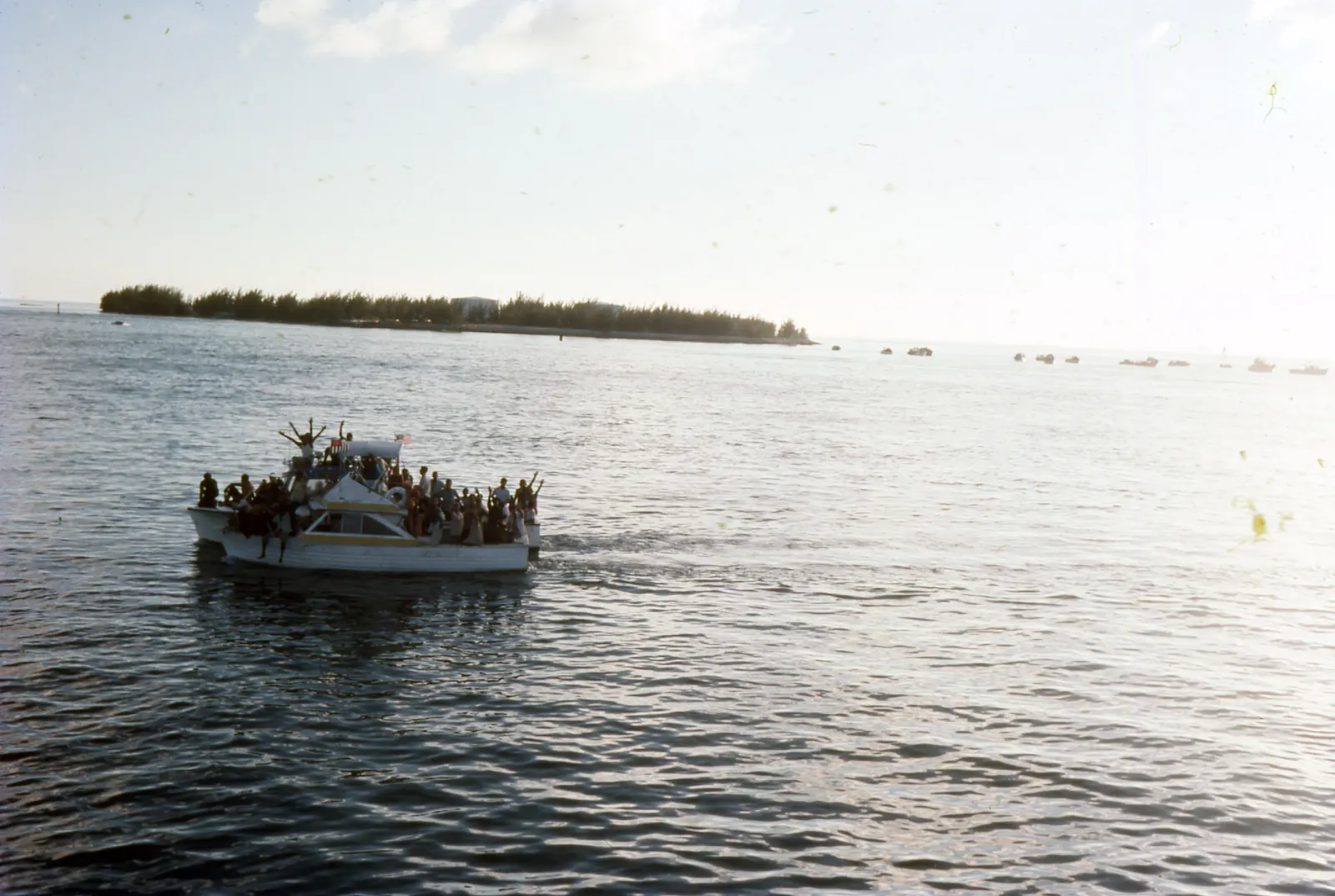
In Miami the response was immediate. Exiles rented fishing boats, shrimpers, and pleasure craft; estimates put the fleet at about 1,700 vessels16. On April 21 Radio Havana announced that U.S. boats would be allowed to pick up relatives of their crews7, and that same day the first Mariel boat reached Key West with 48 people aboard1. Within four days there were nearly 300 boats in the Cuban harbor, and Florida Governor Bob Graham declared a state of emergency in Monroe and Dade counties1.
The organized crowds of neighbors and party members who insulted and sometimes attacked those leaving became known in Cuba as "actos de repudio" (acts of repudiation), a practice Amnesty International was still documenting against dissidents in the 1990s8. The worst episode came on May 2. About 800 former political prisoners and relatives had gathered at the U.S. Interests Section in Havana to process their departure when a group of pro-government civilians began to attack them; some 400 people took refuge inside the building, and many remained there until September9. Three days later Carter described them as people "hiding from mob violence instigated by Castro himself"10. To get out, some had to humble themselves before the police. A rafter who reached Florida in 1993, interviewed by Holly Ackerman and Juan M. Clark, recalled that in 1980 one had to report to the station and declare oneself homosexual, something he refused to do11.
An open heart and open arms
On May 5, at the biennial convention of the League of Women Voters at the Sheraton hotel in Washington, a delegate asked Carter what he intended to do about the thousands of immigrants arriving daily and the strain on local communities. Carter answered that more than 10,000 Cubans had arrived in the previous few days, that Eglin Air Force Base in northwest Florida had been opened as a staging area, and he closed with a sentence that would follow him10:
"But we'll continue to provide an open heart and open arms to refugees seeking freedom from Communist domination and from economic deprivation, brought about primarily by Fidel Castro and his government." Jimmy Carter, May 5, 198010
In May 86,488 people arrived, 69% of the entire exodus112. Nine days after the speech, on May 14, Carter changed course. He announced a five-point program: an orderly airlift and sealift only for people screened in advance (former political prisoners, asylum seekers from the Peruvian embassy and the Interests Section, and close relatives of permanent residents); a family registration office in Miami; an order for the Coast Guard to tell all vessels to return empty; fines, criminal prosecution, and seizure of boats for anyone who kept making the trip; and exclusion proceedings against criminals13. That day he said that at least seven people had died at sea13.
The flotilla did not stop all at once. On June 3 the Red Diamond V, the first large foreign-flag freighter of the boatlift, docked in Key West, and the count of arrivals passed 100,0007. The Coast Guard assisted 1,387 vessels, intercepted as many as 3,784 migrants in a single day, and recorded 27 deaths, 14 of them on an overloaded boat that capsized on May 1714; the service's official history puts the loss at 25 lives7. In October Carter said the Coast Guard and Navy had carried out "more than 1,000 rescue missions"15. According to the Coast Guard, 60% of the arrivals were men, 22% women, and 18% minors14. In those same months about 25,000 Haitians reached South Florida16.
Prisoners, patients, and the real number
The part of Mariel that weighed most heavily in American memory was the inclusion, by decision of the Cuban government, of common prisoners and psychiatric patients. The White House statement of May 14 put it bluntly: Castro "has taken hardened criminals out of prison and mental patients out of hospitals and has forced boatowners to take them to the United States"; over 400 such prisoners had already been detained, and the United States would not permit the country "to be used as a dumping ground"17. A 1991 study by the New York State Department of Correctional Services summarizes that the Cuban government placed in the flotilla people who had served or were serving sentences, for common or political offenses, as well as the mentally ill, and that Cuban Americans were often forced to take them aboard as a condition for bringing out their relatives12.
The available figures point to a small minority:
- In August 1980 a National Security Council committee counted more than 1,700 people who had confessed to serious crimes and were in federal prisons, and about 1,500 with serious psychiatric problems in the camps; officials estimated there might be between 5,000 and 7,000 people they would want to exclude18.
- The Immigration and Naturalization Service (INS) refused to admit about 2,000 people because of mental illness or criminal records; other estimates raised the number of criminals to 5,000, and an academic study from 1981-1982 cited in the same report puts it between 1.5% and 4% of arrivals12.
- The excludable list that the United States and Cuba agreed on in December 1984 had 2,746 names, a little over 2% of the 124,776 counted by the Coast Guard1914. The Reagan White House stressed at the time that they represented "only a very small percentage" of the boatlift20.
Other numbers circulated against those data. In the first weeks, according to NPR, an INS official told People magazine that 85% were convicts, and the film Scarface (1983) opened with the claim that 25,000 of them, one in five, had criminal records5. In 2005 the Miami Herald wrote that studies indicated about 10% were criminals released from Cuban jails, without saying which studies21. Part of the discrepancy lies in what counts as a crime: a federal task force report listed among the reasons some arrivals had been jailed in Cuba refusing to join the Communist Party, refusing to work or serve in the army, loitering, drinking, gambling, and even being gay5.
The camps: Eglin, Chaffee, Indiantown Gap, and McCoy
The first arrivals slept in hangars at Boca Chica Naval Air Station in the Keys, and reception centers included Miami's Orange Bowl stadium, churches, and former missile sites1. Those with relatives or friends to sponsor them left quickly; those without waited in a federal center22. On May 7, with the Tamiami youth center in Miami and Eglin Air Force Base full, the White House announced it would use Fort Chaffee, in Arkansas, which had already housed Indochinese refugees in 1975 and 197622. Fort Indiantown Gap in Pennsylvania and Fort McCoy in Wisconsin were added2324.
Between May 9 and 18, 19,048 Cubans arrived at Fort Chaffee, and 25,390 passed through the fort in all25. The waiting, the uncertainty, and the confinement exploded on June 1: between 2,000 and 3,000 detainees rioted, four buildings burned, and 62 people were injured, five of them guards; Governor Bill Clinton ordered the National Guard to support the police25. On June 7 the White House announced that those responsible would remain confined and that Cubans identified as having committed serious crimes in Cuba would be held in secure custody while their exclusion was processed26. According to the University of Miami's Cuban Heritage Collection, the riot contributed to Clinton's defeat in his bid for reelection as governor that fall27.
On August 20 about 16,000 Cubans remained in the camps, including about 2,000 unaccompanied minors18. On September 20 the federal government announced it would concentrate those who remained at Fort Chaffee25. The other camps closed around October 15, when about 9,000 people still had no sponsor; the governor of Arkansas asked that no mentally ill people be moved to the fort. By February 1981 fewer than 6,000 remained to be placed23.
The closing of the port
The end was negotiated in secret. In September, State Department executive secretary Tarnoff met with Castro. According to the White House Situation Room summary of September 13, Castro said that Cuba would "suspend" all departures from Mariel starting September 25 and would only guarantee that Mariel would remain closed until November 4. He also asked that the gesture not turn into a public negotiation that could damage Carter's reelection chances28. On September 30 the White House considered the closing confirmed, because U.S. boats had been forced to leave the port, and approved withdrawing Coast Guard and Navy units before the end of October29. The Coast Guard dates the emergency from April 21 to September 28, 198030; the National Archives place the negotiated end of the boatlift in October1.
The State Department recorded arrivals by month as follows:
| Month in 1980 | Arrivals |
|---|---|
| April | 7,655 |
| May | 86,488 |
| June | 20,800 |
| July | 2,629 |
| August | 3,939 |
| September | 3,258 |
| October | 10 |
| Total | 124,779 |
Source: State Department figures collected by Clark, Lasaga, and Reque (1981), cited by the New York State Department of Correctional Services12.
The total changes depending on who is counting and until when: the Coast Guard gives 124,776 for the period from April 1 to September 2514, and the Miami Herald used the figure 125,266 in 200521. The prudent course is therefore to speak of between 124,776 and 125,266 people, about 125,000 in round numbers.
An invented status: the Cuban-Haitian entrant
Mariel came one month after the Refugee Act of 1980, which had written into U.S. law a definition of refugee based on individual persecution4. Many of the Cubans and the great majority of the Haitians who were arriving did not fit that definition case by case16, and, according to the 1991 New York study, recognizing them as refugees would have obligated the federal government to pay the assistance provided for refugees and would have set a precedent Washington wanted to avoid12. The Carter administration chose another route: according to the Immigration and Ethnic History Society, on June 20, 1980 it created the Cuban-Haitian entrant program, which granted temporary parole under the label Cuban-Haitian Entrant (Status Pending), with access to asylum procedures and community assistance616.
Congress gave that label content with the Refugee Education Assistance Act of 1980 (Pub. L. 96-422), which Carter signed on October 10, 1980, before a joint session of the Florida legislature3115. Its title V, known as the Fascell-Stone amendment after Dante Fascell and Senator Dick Stone, both of whom Carter congratulated at the signing, allowed the federal government to give entrants the same benefits as refugees and to reimburse state and local governments3115. The law defines the Cuban and Haitian entrant, first, as "any individual granted parole status as a Cuban/Haitian Entrant (Status Pending) or granted any other special status subsequently established under the immigration laws for nationals of Cuba or Haiti"31. At the signing Carter explained that it released $100 million already appropriated for reimbursements15.
That status was not residence. The Marielitos obtained residence years later by two paths: by late 1984 the INS was already processing their applications under the Cuban Adjustment Act itself20, and in 1986 the immigration reform law opened a specific adjustment for Cuban and Haitian entrants, which is covered in the next chapter16.
The stigma of the Marielito
For part of the press and the public, "marielito" came to mean criminal. In 2005 the Miami Herald recalled the crime wave committed by a minority of the new arrivals, the retirees mugged in South Beach, and the mentally ill wandering around Little Havana21. Scarface fixed that image in film5. By the 1990s journalists and politicians were using the word "Mariel" as a synonym for migration catastrophe1. The Marielitos were also different from earlier waves: younger, more often single, with more Black and mixed-race Cubans and less English, according to Ackerman and Clark11. Some critics argue that for that reason, and because of their numbers, they received less help than the exiles of the 1960s1.
Economics offers another view, and also an open debate. In 1990 the economist David Card published in the Industrial and Labor Relations Review a study that became a classic: the Marielitos increased the Miami labor force by 7% and the Cuban labor force by 20%, yet he found virtually no effect on the wages of non-Cuban workers between 1979 and 1985, nor an increase in unemployment among Black or other low-skilled workers32. In 2017 George Borjas revisited the data in the same journal, focusing on workers without a high school diploma, since at least 60% of the Marielitos lacked one, and concluded that the wages of that group in Miami fell by between 10% and 30%33. Giovanni Peri and Vasil Yasenov, using a synthetic control method, found no significant wage differences for those workers compared with similar cities34, and Michael Clemens and Jennifer Hunt attributed the drop Borjas found to a change around 1980 in the racial composition of the small Miami subsamples of the employment survey used (the Current Population Survey), unrelated to the exodus35. The discussion continues in the specialized literature.
The record of integration is easier to document. In December 1984 the White House itself stated that the vast majority of those who came in the Mariel boatlift had incorporated themselves into American life20, and the Miami Herald titled its twenty-five-year retrospective "Mariel: From turmoil to triumph"21. For the 2,746 on the excludable list, by contrast, the story was only beginning.
Notes and sources
-
Lynn Nashorn, "Castro, Cuba, and a Fleet of Fishing Boats: The Causes and Effects of the Mariel Boatlift," The Text Message (blog of the Textual Records Division, U.S. National Archives), August 3, 2021, accessed November 11, 2026. https://text-message.blogs.archives.gov/2021/08/03/the-causes-and-effects-of-the-mariel-boatlift/ back back back back back back back back back back back back back back back
-
Department of State, Foreign Relations of the United States, 1977-1980, vol. XXIII, document 89, "Summary of Conclusions of a Mini-Special Coordination Committee Meeting," April 9, 1980, with a note citing Wayne Smith's memoir (The Closest of Enemies, pp. 209-210). https://history.state.gov/historicaldocuments/frus1977-80v23/d89 back back back
-
White House, "Cuban Refugees in the Peruvian Embassy in Havana: White House Statement," April 14, 1980, in The American Presidency Project (UC Santa Barbara). https://www.presidency.ucsb.edu/documents/cuban-refugees-the-peruvian-embassy-havana-white-house-statement back back back
-
Joyce C. Vialet, "Refugee Act Reauthorization: Admissions and Resettlement Issues," Congressional Research Service, Issue Brief IB83060, updated November 22, 1983. https://www.everycrsreport.com/files/19831122_IB83060_07dfb482ebc3acac8f1d816ab55e0fba83ca2409.pdf back back
-
NPR, White Lies, episode "The Rumors" (transcript), February 9, 2023. https://www.npr.org/transcripts/1149875505 back back back back
-
Immigration and Ethnic History Society, "Mariel Boatlift of 1980," Immigration History, accessed November 11, 2026. https://immigrationhistory.org/item/mariel-boatlift/ back back
-
Benedict L. Stabile and Robert L. Scheina, "U.S. Coast Guard Operations During the 1980 Cuban Exodus," Office of the Historian, U.S. Coast Guard (copy archived in 2008 by the University of North Texas). https://webarchive.library.unt.edu/web/20080917154254/http://uscg.mil/history/articles/USCG_Mariel_History_1980.asp back back back
-
Amnesty International, "United States/Cuba: Cuban "Rafters", Pawns of Two Governments," AMR 51/86/94, October 1994. https://www.amnesty.org/en/wp-content/uploads/2021/06/amr510861994en.pdf back
-
Department of State, Foreign Relations of the United States, 1977-1980, vol. XXIII, document 103, telegram from the Interests Section in Havana, May 5, 1980, note 2. https://history.state.gov/historicaldocuments/frus1977-80v23/d103 back
-
Jimmy Carter, "League of Women Voters Remarks and a Question-and-Answer Session at the League's Biennial National Convention," May 5, 1980, in The American Presidency Project. https://www.presidency.ucsb.edu/documents/league-women-voters-remarks-and-question-and-answer-session-the-leagues-biennial-national back back back
-
Holly Ackerman and Juan M. Clark, The Cuban Balseros: Voyage of Uncertainty, Miami, 1995, text deposited in DukeSpace (Duke University). https://hdl.handle.net/10161/12962 back back
-
New York State Department of Correctional Services, Division of Planning, Research and Evaluation, "The Mariel Cuban Problem," April 1991 (NCJ 142919), pp. 3-6. https://www.ojp.gov/pdffiles1/Digitization/142919NCJRS.pdf back back back back back
-
Jimmy Carter, "Cuban Refugees: Remarks to Reporters Announcing Administration Policy Toward the Refugees," May 14, 1980, in The American Presidency Project. https://www.presidency.ucsb.edu/node/250325 back back
-
U.S. Coast Guard, "Mariel Boatlift" (statistical sheet of the Alien Migrant Interdiction office, copy archived in 2008 by the University of North Texas). https://webarchive.library.unt.edu/eot2008/20081103212952/http://www.uscg.mil/hq/cg5/cg531/AMIO/mariel.asp back back back back
-
Jimmy Carter, "Remarks on Signing the Refugee Education Assistance Act of 1980 Into Law Before a Joint Session of the Florida State Legislature," October 10, 1980, in The American Presidency Project. https://www.presidency.ucsb.edu/documents/remarks-signing-the-refugee-education-assistance-act-1980-into-law-before-joint-session back back back back
-
Ruth Ellen Wasem, "Cuban Migration to the United States: Policy and Trends," Congressional Research Service, R40566, June 2, 2009, pp. 1-2 and 6. https://www.everycrsreport.com/reports/R40566.html back back back back
-
White House, "White House Statement on the Administration Policy Toward the Cuban Refugees," May 14, 1980, in The American Presidency Project. https://www.presidency.ucsb.edu/node/250335 back
-
Department of State, Foreign Relations of the United States, 1977-1980, vol. XXIII, document 118, "Summary of Conclusions of a Mini-Special Coordination Committee Meeting," August 20, 1980. https://history.state.gov/historicaldocuments/frus1977-80v23/d118 back back
-
U.S. Department of Justice, Office of the Solicitor General, Garcia-Mir et al. v. Smith et al., No. A-582, memorandum for the respondents before the Supreme Court, October Term 1984. https://www.justice.gov/d9/osg/briefs/1984/01/01/sg840055.txt back
-
Larry Speakes, "Statement by Principal Deputy Press Secretary Speakes on an Agreement With Cuba Concerning Immigration and Refugee Matters," December 14, 1984, Ronald Reagan Presidential Library. https://www.reaganlibrary.gov/research/speeches/121484c back back back
-
Oscar Corral and Andres Viglucci, "Mariel: From turmoil to triumph," The Miami Herald, April 3, 2005 (reproduced by latinamericanstudies.org). https://www.latinamericanstudies.org/mariel/triumph.htm back back back back
-
White House, "Cuban Refugees: Announcement of the Use of Fort Chaffee, Arkansas, as a Temporary Housing Site," May 7, 1980, in The American Presidency Project. https://www.presidency.ucsb.edu/documents/cuban-refugees-announcement-the-use-fort-chaffee-arkansas-temporary-housing-site back back
-
U.S. General Accounting Office (GAO), "Assessment of Circumstances Leading to the Contract for Comprehensive Mental Health Care Services for Cuban Entrants at Fort Chaffee, Arkansas," HRD-81-55 (B-202069), February 6, 1981. https://www.gao.gov/products/hrd-81-55 back back
-
NPR, White Lies, episode "The Entry Fiction" (transcript), February 16, 2023. https://www.npr.org/transcripts/1149876040 back
-
Steven Teske and Blair Rogers, "Cuban Refugee Crisis," CALS Encyclopedia of Arkansas, accessed November 11, 2026. https://encyclopediaofarkansas.net/entries/cuban-refugee-crisis-4248/ back back back
-
White House, "Cuban Refugees: Statement by the White House Press Secretary," June 7, 1980, in The American Presidency Project. https://www.presidency.ucsb.edu/documents/cuban-refugees-statement-the-white-house-press-secretary back
-
University of Miami Libraries, Cuban Heritage Collection, "Crisis & Response: The Rafter Crisis of 1994 and the U.S. Response," digital exhibit Between Despair and Hope: Cuban Rafters at the U.S. Naval Base Guantánamo Bay, 1994-1996, 2011. https://scholar.library.miami.edu/digital/exhibits/show/guantanamo/crisis back
-
Department of State, Foreign Relations of the United States, 1977-1980, vol. XXIII, document 124, "Situation Room Checklist," September 13, 1980. https://history.state.gov/historicaldocuments/frus1977-80v23/d124 back
-
Department of State, Foreign Relations of the United States, 1977-1980, vol. XXIII, document 126, memorandum from David Aaron to President Carter, September 30, 1980. https://history.state.gov/historicaldocuments/frus1977-80v23/d126 back
-
U.S. Coast Guard, Office of Law Enforcement, "Alien Migrant Interdiction" (copy archived in 2008 by the University of North Texas). https://webarchive.library.unt.edu/eot2008/20081103212952/http://www.uscg.mil/hq/cg5/cg531/amio.asp back
-
Refugee Education Assistance Act of 1980, Pub. L. 96-422, title V, sec. 501, 94 Stat. 1799, 1809-1810 (October 10, 1980). https://www.govinfo.gov/content/pkg/STATUTE-94/pdf/STATUTE-94-Pg1799.pdf back back back
-
David Card, "The Impact of the Mariel Boatlift on the Miami Labor Market," Industrial and Labor Relations Review, vol. 43, no. 2, 1990, pp. 245-257; earlier version: NBER Working Paper 3069, August 1989. https://www.nber.org/papers/w3069 back
-
George J. Borjas, "The Wage Impact of the Marielitos: A Reappraisal," ILR Review, vol. 70, no. 5, 2017, pp. 1077-1110; earlier version: NBER Working Paper 21588. https://www.nber.org/papers/w21588 back
-
Giovanni Peri and Vasil Yasenov, "The Labor Market Effects of a Refugee Wave: Synthetic Control Method Meets the Mariel Boatlift," Journal of Human Resources, vol. 54, no. 2, 2019, pp. 267-309; earlier version: NBER Working Paper 21801. https://www.nber.org/papers/w21801 back
-
Michael A. Clemens and Jennifer Hunt, "The Labor Market Effects of Refugee Waves: Reconciling Conflicting Results," ILR Review, vol. 72, no. 4, 2019, pp. 818-857; earlier version: NBER Working Paper 23433. https://www.nber.org/papers/w23433 back