1973-1979
Dialogue and Reunion
From departures through third countries to community visits
On April 6, 1973, the last Freedom Flight landed in Miami, and with it the only direct, legal route between Cuba and the United States closed. For the next six years, leaving the island again became a long and almost always indirect process, through Madrid or Mexico City. Those same years, however, saw something that in 1973 seemed unthinkable: an agreement between the two governments on hijackings, diplomatic offices in both capitals, a public negotiation between Fidel Castro and a group of exiles, the release of thousands of political prisoners and, in 1979, the return visits of tens of thousands of Cubans whom the Havana government had until shortly before called "gusanos" (worms). That reunion had a price in Miami, New Jersey and Puerto Rico, where those who talked with Havana were branded traitors and two of them were murdered.
Departures through third countries
After the airlift ended, the Immigration and Naturalization Service (INS) kept granting parole to Cubans, but they no longer arrived from Varadero. According to the INS, they were "primarily persons who have left Cuba for another country" and who were parents, spouses or children of permanent resident aliens or refugees in the U.S. In fiscal year 1973, besides the 4,294 who managed to arrive by air, 5,107 Cubans entered by other means1.
On October 26, 1973, an expanded one-year program was authorized to grant parole to Cubans living in third countries, which also included certain unaccompanied minors under 18 with relatives in the U.S. In fiscal year 1974, 11,577 Cubans entered this way2; in 1975, 6,9403; and in 1976, 2,3414. Spain was the main gateway: the INS explained in 1977 that most Cubans who could qualify for conditional entry as refugees were processed there, thanks to a special arrangement with the Spanish government that allowed Cubans temporarily in that country to apply5.
That route was neither new nor cheap. As early as 1969, a U.S. intelligence estimate observed that those with money bought tickets to Madrid or Mexico City rather than wait for the airlift6. And leaving remained final: for some twenty years after 1959, Cuba barred emigrants from returning and confiscated their property on the island when they left7.

The 1973 anti-hijacking agreement
The first formal negotiation between the two governments after the flights ended was not about migration but about hijackings. The diversion of aircraft to Cuba was then a recurring problem, and after several hijackings by common criminals the Cuban government declared itself willing to negotiate, and on November 25, 1972 talks began in Havana through the Swiss Embassy8.
Earlier attempts had failed because Cuba demanded that any agreement include the return of exiles who had left illegally and a ban on attacks on its territory by exile groups. The text approved in February 1973 partly addressed those concerns, but it was not retroactive, which protected Cubans already in the U.S., and it left open the possibility of political asylum when there was no extortion or injury. It covered aircraft and vessels. The parties pledged to give serious consideration to extraditing hijackers rather than trying them in the country of arrival, to protect diverted passengers and aircraft and let them continue their journey, to return funds or property obtained illegally, and to prosecute under their laws anyone who committed acts of piracy against the other's territory. It would last five years and could be terminated on six months' notice8. The agreement was formalized on February 15, 1973 with a note from Secretary of State William Rogers to the chargé d'affaires of Czechoslovakia, the country that represented Cuban interests in Washington8. Weeks later, the State Department asked its ambassadors in Latin America to explain to governments that this did not mean a change in its policy toward Cuba9.
The agreement also touched those who fled by sea. In August 1976, Havana demanded that several Cubans who had stolen boats to reach the U.S. be punished. Washington offered to return the recovered boats, but replied that in none of the cases had weapons or threats been used against the crew and that it was not for it to act10.
On October 6, 1976, a Cubana de Aviación airliner exploded in flight off Barbados and everyone aboard died; anti-Castro groups with ties to Miami claimed responsibility11. On October 15 Castro renounced the 1973 agreement12, which expired the following year13.
A partial thaw
There had been feelers before Carter. In July 1975 the Organization of American States (OAS) left each country free to restore relations with Cuba14, and in November of that year, through an emissary, Havana let it be known that it might allow a limited number of family visits for humanitarian reasons. The State Department prepared a reply, which Kissinger approved with changes, open to studying a family visit plan but presenting the dispatch of Cuban troops to Angola as a fundamental obstacle to resolving the problems between the two countries15.
Under Jimmy Carter the process advanced. Presidential Directive PD/NSC-6, of March 1977, authorized a first round of negotiations16, and the first direct official contact since 1961 took place in New York, March 24 to 29, 1977, with substantial agreement on fishing and a provisional maritime boundary. The U.S. lifted travel restrictions to Cuba and suspended reconnaissance flights over the island17. In the second round, held in Havana in April, Cuban Foreign Minister Isidoro Malmierca said his government would consider releasing American prisoners, being more flexible in letting American citizens leave with family members, and increasing "visits both ways by members of divided Cuban families"; allowing more emigration, he cautioned, would be more difficult18.
On May 30, 1977, in New York, the two governments exchanged notes to open Interests Sections at the same time. On September 1, the U.S. Interests Section, headed by Lyle F. Lane, opened in the Swiss Embassy in Havana, and the Cuban one, headed by Ramón Sánchez-Parodi, in the Czechoslovak Embassy in Washington18. By then Cuba had already released 10 of the 30 American prisoners, let 6 U.S. citizens leave and permitted "a handful" of visits by divided families17.
In the exile community, the reaction was mostly hostile. When Secretary of State Cyrus Vance met community leaders in February 1977, the State Department estimated that about 650,000 Cubans lived in the U.S. and that attitudes among them toward normalization ranged from open hostility among the elderly to an even split among those under 3013. On leaving, the visitors told the press that they were unanimously opposed to negotiating with Castro13. A minority thought differently. In 1977 the Antonio Maceo Brigade, made up of 55 young left-leaning exiles, traveled to Cuba, in what historian Michael J. Bustamante describes as the most public, though not the only, opening toward return19.
The 1978 Dialogue
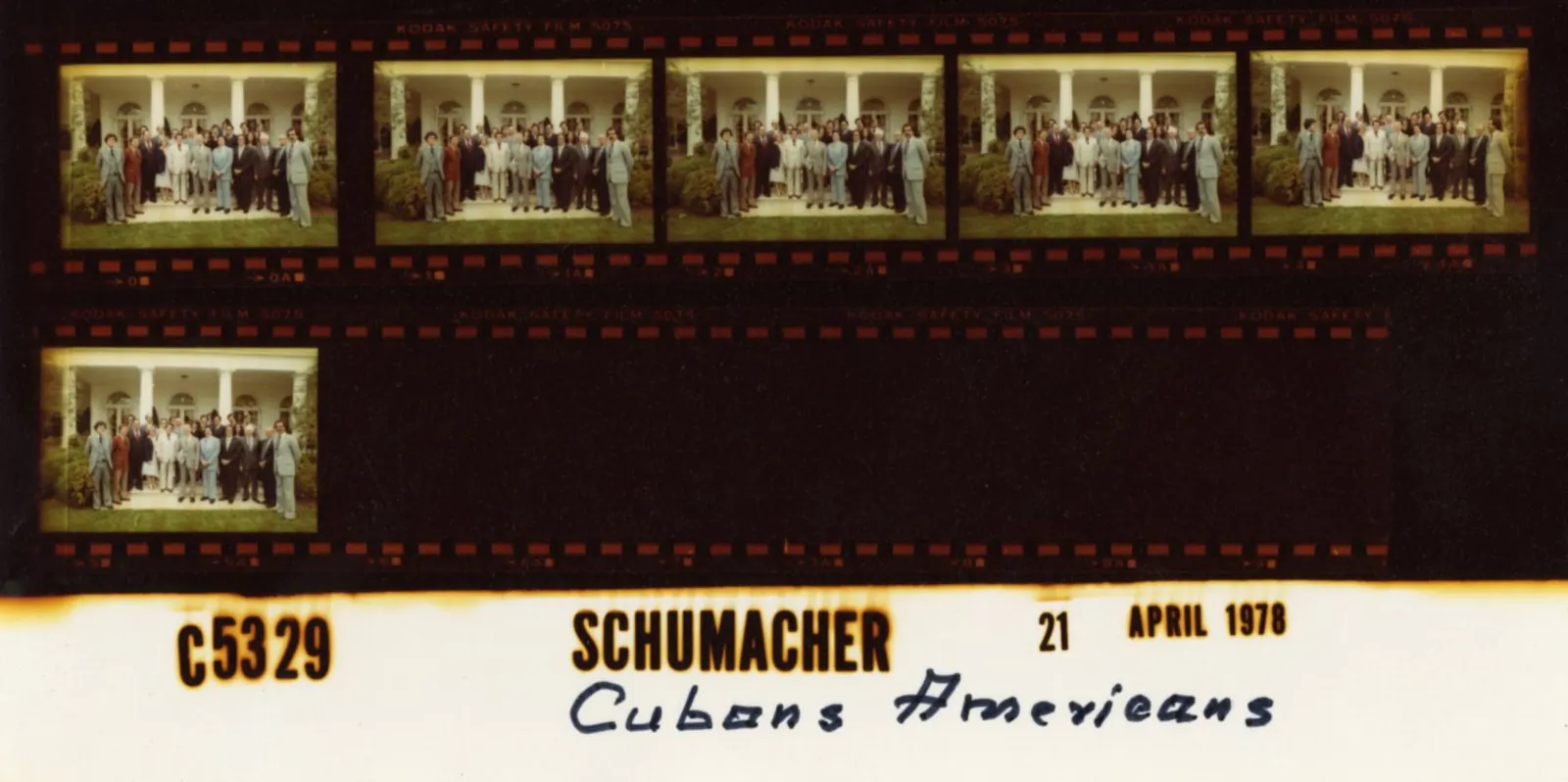
The channel that led to the Dialogue ran through a Miami exile. The lawyer Bernardo Benes, a Cuban exile, met with Castro on February 16, 1978, and that conversation reached the White House in a memorandum the following month20; as late as March 1979 Benes was passing messages from José Luis Padrón, a Castro emissary, to the State Department21.
On September 6, 1978, in an interview with 25 Cuban-American journalists, Castro announced that the exiles would stop being "gusanos" (worms) and would become "the Cuban community abroad," as the U.S. Interests Section rendered his words22. The State Department read this as an attempt to win over the roughly 600,000 Cuban Americans, reduce support for exile terrorism and, in time, turn them into a lobby against the embargo. It also noted that this strategy did not conflict with U.S. objectives, because what Castro was offering, the release of prisoners and more family visits, was what Washington was asking for22. The memorandum explained the attitude of the exiles willing to negotiate this way:
"They have concluded that if families are to be reunited and prisoners freed, it will only come about through a dialogue with the present government." State Department, memorandum from Peter Tarnoff to Zbigniew Brzezinski, September 13, 197822
The releases began before the public meetings. In September 1978 an INS team, with Justice and State officials, processed the first group of political prisoners in Havana, and in October the first 79, prisoners and relatives together, arrived at Miami airport on parole23. On October 28, at a private meeting in Cuernavaca, Mexico, the Cuban envoys told the Americans that the release of prisoners would continue and probably increase24.
The first session of the Dialogue was held in Havana in November 1978, with 75 representatives of the emigration facing the top leadership of the Cuban government; the topics were family reunification, visits and the release of prisoners25. The group came to be known as the Committee of 7526. On December 9, 1978, after a second session in Havana26, the Cuban government and the exile representatives signed a "Final Act." Some 3,600 prisoners were released and authorized to leave Cuba27.
Castro used the press conference that followed to pressure Washington: he argued that the U.S. had a "moral obligation" to take the former prisoners and their families, and suggested that if only 100 or 150 prisoners a month wanted to go to the U.S., Washington could use the rest of its monthly quota of 400 paroles for the former prisoners. According to Castro, of the first list of 400 only 82 wanted to go to the U.S.27. The slowness of the process became an argument. In November 1979, according to an FBI report, Castro told an exile who visited him that the announced program had been completed without a response from the U.S. government and that the remaining prisoners would now be "cards" for future negotiations20. Among those freed that year was Huber Matos, who had backed the fight against Batista and later turned against the Castro government; he left Cuba in October 197928.
"The community": the 1979 visits
The most visible result of the Dialogue was the visits. For some twenty years, return by emigrants had been prohibited7. By mid-January 1979 the Cuban government had already set up a permanent mechanism to receive them. The trips were organized by Havanatur, a company incorporated in Panama, first with stopovers in Jamaica or Mexico and later with direct charter flights from the U.S.; in Miami, New Jersey and Puerto Rico, small agencies, many run by participants in the Dialogue, competed for customers19.
The visits were sold as tourist packages: they cost at least $740 for eight days, and $1,000 or more from cities such as New York, and they included a hotel even if the traveler was going to sleep at his family's home. In the first three months of the year alone, 22,000 exiles arrived loaded with gifts, from clothing and food to appliances. In February, Castro had to explain, at a closed meeting of the Communist Party, the return of the "gusanos" turned "mariposas" (butterflies), and on May 1 a new customs law limited luggage to 44 pounds19. Over the course of 1979, according to Bustamante, nearly 100,000 visitors from the diaspora landed in Cuba19.
Did those visits influence the 1980 crisis? Many in Miami and in Havana believed so. A Havana resident told a reporter for El Miami Herald in May 1980 that the crisis was "a consequence of the community's visits to Cuba" (translated from Spanish). Bustamante cautions, however, that this explanation is "too simplistic" (translated from Spanish): the visits made many Cubans question their past and present, but in Miami they met more opposition than support, and they were not a deliberate exile plan to undermine the Revolution29. A CIA analysis of April 1980 pointed to other underlying factors: in the preceding years crime, vandalism, labor apathy, illegal departures and even some isolated incidents against the government had increased, and Castro's main goal in opening departures was to rid himself of political malcontents and of those dissatisfied with the economic situation30.
Dialogueros and violence
Most of the exile community associated traveling to Cuba with supporting communism, and a minority opposed it violently, planting bombs at some of the agencies that organized the trips19. Those who had taken part in the Dialogue came to be called, with contempt, "dialogueros," and suffered everything from intimidation to bombings31.
The group Omega 7, born in New Jersey according to FBI sources cited by the local press, claimed responsibility in March 1979 for several attacks: on the Weehawken Cuban Social Club, an organization devoted to reuniting families, on a Union City pharmacy that sent medicine to Cuba, and on a Trans World Airlines plane bound for Los Angeles, in which four baggage handlers were injured26. In 1979 Carlos Muñiz Varela, a travel agent and member of the Committee of 75, was murdered in San Juan, Puerto Rico, while organizing a trip to Cuba; a group calling itself Comando Cero claimed responsibility for the crime26.
On November 25, 1979, José Negrín, 37, coordinator of the Weehawken club and a member of the Committee of 75, was shot to death as he got into his car near his home in Union City, in front of his 12-year-old son. He had received numerous death threats. People who said they belonged to Omega 7 claimed responsibility for the killing in calls to the Associated Press and United Press International: "We will continue with these executions until we have eliminated all the traitors living in this country"26.
On the eve of Mariel
In early 1980 several tensions converged in Cuba: many former political prisoners and their families were still waiting to leave for the U.S., tens of thousands of Cubans had received relatives from the North in their homes and, according to the CIA, discontent with the economic situation was growing30. On April 1, 1980, a bus carrying Cubans who wanted to leave crashed into the Peruvian embassy in Havana; the government withdrew the guards and some 10,800 people took refuge in the compound32. A month later, about 800 former political prisoners and their relatives gathered in front of the U.S. Interests Section to process their departure and were attacked by a mob33. What came next, the exodus through the port of Mariel, is told in The Mariel Exodus.
Notes and sources
-
U.S. Department of Justice, Immigration and Naturalization Service, Annual Report of the Immigration and Naturalization Service, fiscal year 1973, section "Cuban Refugees." Digitized copy from the USCIS History Library, hosted on honorfirst.com (third-party site). https://www.honorfirst.com/uploads/4/7/0/8/47087249/1973_ins_annual_report.pdf back
-
Immigration and Naturalization Service, Annual Report, fiscal year 1974, section "Cuban Refugees." Digitized copy from the USCIS History Library, hosted on honorfirst.com (third-party site). https://www.honorfirst.com/uploads/4/7/0/8/47087249/1974_ins_annual_report.pdf back
-
Immigration and Naturalization Service, Annual Report, fiscal year 1975, section "Cuban Refugees." Digitized copy from the USCIS History Library, hosted on honorfirst.com (third-party site). https://www.honorfirst.com/uploads/4/7/0/8/47087249/1975_ins_annual_report.pdf back
-
Immigration and Naturalization Service, Annual Report, fiscal year 1976, section "Cuban Refugees." Digitized copy from the USCIS History Library, hosted on honorfirst.com (third-party site). https://www.honorfirst.com/uploads/4/7/0/8/47087249/1976_ins_annual_report.pdf back
-
Immigration and Naturalization Service, Annual Report, fiscal year 1977, section "Conditional Entry." Digitized copy from the USCIS History Library, hosted on honorfirst.com (third-party site). https://www.honorfirst.com/uploads/4/7/0/8/47087249/1977_ins_annual_report.pdf back
-
U.S. Department of State, Office of the Historian, Foreign Relations of the United States, 1969-1976, vol. E-10, document 207, National Intelligence Estimate 85-69, September 2, 1969. https://history.state.gov/historicaldocuments/frus1969-76ve10/d207 back
-
Human Rights Watch, Familias deshechas: el costo humano de las restricciones de Estados Unidos y Cuba sobre los viajes [Families torn apart: the human cost of U.S. and Cuban restrictions on travel], October 2005, chapter II, "Las restricciones de Cuba sobre los viajes" [Cuba's travel restrictions]. https://www.hrw.org/legacy/spanish/informes/2005/cuba1005/2.htm back back
-
Foreign Relations of the United States, 1969-1976, vol. E-11, part 1, document 271, memorandum from Serban Vallimarescu to Brent Scowcroft, "Hijacking Agreement with Cuba," February 13, 1973, with an editorial note on the February 15 note. https://history.state.gov/historicaldocuments/frus1969-76ve11p1/d271 back back back
-
Foreign Relations of the United States, 1969-1976, vol. E-11, part 1, document 273, State Department circular telegram 43380, March 9, 1973. https://history.state.gov/historicaldocuments/frus1969-76ve11p1/d273 back
-
Foreign Relations of the United States, 1969-1976, vol. E-11, part 1, document 318, State Department message to the Swiss Embassy in Havana, August 17, 1976. https://history.state.gov/historicaldocuments/frus1969-76ve11p1/d318 back
-
Foreign Relations of the United States, 1969-1976, vol. E-11, part 1, document 320, memorandum from Harry Shlaudeman to Henry Kissinger, October 12, 1976. https://history.state.gov/historicaldocuments/frus1969-76ve11p1/d320 back
-
Foreign Relations of the United States, 1969-1976, vol. E-11, part 1, document 321, memorandum from Harry Shlaudeman to Henry Kissinger, "Cubana Airlines Crash: Strategy Paper," October 22, 1976, source note. https://history.state.gov/historicaldocuments/frus1969-76ve11p1/d321 back
-
Foreign Relations of the United States, 1977-1980, vol. XXIII, document 4, memorandum from Terence Todman to Secretary of State Cyrus Vance, February 22, 1977, with an editorial note citing The New York Times of February 26, 1977. https://history.state.gov/historicaldocuments/frus1977-80v23/d4 back back back
-
Foreign Relations of the United States, 1977-1980, vol. XXIII, document 12, CIA document, April 12, 1977. https://history.state.gov/historicaldocuments/frus1977-80v23/d12 back
-
Foreign Relations of the United States, 1969-1976, vol. E-11, part 1, document 306, telegram from the State Department to Secretary Kissinger, "Family Visits to Cuba," December 29, 1975. https://history.state.gov/historicaldocuments/frus1969-76ve11p1/d306 back
-
Foreign Relations of the United States, 1977-1980, vol. XXIII, document 20, memorandum from Zbigniew Brzezinski to President Carter, August 5, 1977, https://history.state.gov/historicaldocuments/frus1977-80v23/d20; and document 9, Presidential Directive/NSC-6, March 15, 1977, https://history.state.gov/historicaldocuments/frus1977-80v23/d9 back
-
Foreign Relations of the United States, 1977-1980, vol. XXIII, document 18, State Department paper, "How To Proceed Next With Cuba," undated (1977). https://history.state.gov/historicaldocuments/frus1977-80v23/d18 back back
-
Foreign Relations of the United States, 1977-1980, vol. XXIII, document 15, memorandum from Terence Todman to Secretary Vance, "The Havana Negotiations," May 2, 1977, with an editorial note on the opening of the Interests Sections. https://history.state.gov/historicaldocuments/frus1977-80v23/d15 back back
-
Michael J. Bustamante, "Enfrentar el retorno: las 'visitas de la comunidad' de 1979. Parte I: El tenso comienzo de un reencuentro" [Facing the return: the 1979 "community visits." Part I: The tense start of a reunion], OnCuba News, June 8, 2020. https://oncubanews.com/cuba/nacion-y-emigracion/enfrentar-el-retorno-las-visitas-de-la-comunidad-de-1979 back back back back back
-
Foreign Relations of the United States, 1977-1980, vol. XXIII, document 84, memorandum from Robert Pastor to Zbigniew Brzezinski, January 3, 1980, with an FBI report of November 30, 1979 and an editorial note on Bernardo Benes. https://history.state.gov/historicaldocuments/frus1977-80v23/d84 back back
-
Foreign Relations of the United States, 1977-1980, vol. XXIII, document 47, memorandum for the record by Peter Tarnoff, March 19, 1979. https://history.state.gov/historicaldocuments/frus1977-80v23/d47 back
-
Foreign Relations of the United States, 1977-1980, vol. XXIII, document 35, memorandum from Peter Tarnoff to Zbigniew Brzezinski, "Castro Appeals to the Cuban-American Community," September 13, 1978. https://history.state.gov/historicaldocuments/frus1977-80v23/d35 back back back
-
Immigration and Naturalization Service, Annual Report, fiscal year 1978, section "Cuban Political Prisoners." Digitized copy from the USCIS History Library, hosted on honorfirst.com (third-party site). https://www.honorfirst.com/uploads/4/7/0/8/47087249/1978_ins_annual_report.pdf back
-
Foreign Relations of the United States, 1977-1980, vol. XXIII, document 37, memorandum from David Aaron to President Carter, October 30, 1978. https://history.state.gov/historicaldocuments/frus1977-80v23/d37 back
-
Rafael Hernández, "Nación y Emigración: las orillas del diálogo" [Nation and emigration: the shores of the dialogue], OnCuba News, October 11, 2023 (opinion column). https://oncubanews.com/opinion/columnas/con-todas-sus-letras/nacion-y-emigracion-las-orillas-del-dialogo back
-
Wendy Lin, "Cuban exile leader murdered," The Record (Hackensack, New Jersey), November 26, 1979, pp. A-1 and A-4 (digitized copy). https://www.latinamericanstudies.org/dialogue/Record-11-26-1979.pdf back back back back back
-
Foreign Relations of the United States, 1977-1980, vol. XXIII, document 42, telegram from the U.S. Interests Section in Havana, December 11, 1978, with an editorial note on telegram 4089. https://history.state.gov/historicaldocuments/frus1977-80v23/d42 back back
-
Foreign Relations of the United States, 1977-1980, vol. XXIII, document 3, telegram from the State Department to Secretary Vance, February 17, 1977, editorial note on Huber Matos. https://history.state.gov/historicaldocuments/frus1977-80v23/d3 back
-
Michael J. Bustamante, "Enfrentar el retorno: las 'visitas de la comunidad' de 1979. Parte II: Los 'velorios al revés' y sus consecuencias" [Facing the return: the 1979 "community visits." Part II: The "backward wakes" and their consequences], OnCuba News, June 16, 2020 (includes the quotation from El Miami Herald of May 17, 1980; quotations translated from Spanish). https://oncubanews.com/cuba/nacion-y-emigracion/enfrentar-el-retorno-las-visitas-de-la-comunidad-de-1979-2 back
-
Foreign Relations of the United States, 1977-1980, vol. XXIII, document 101, CIA document, "Cuba: Implications of Refugee Situation," April 29, 1980. https://history.state.gov/historicaldocuments/frus1977-80v23/d101 back back
-
Alfredo Prieto, "Aquel Diálogo del 78" [That Dialogue of '78], OnCuba News, February 25, 2020. https://oncubanews.com/opinion/aquel-dialogo-del-78 back
-
Foreign Relations of the United States, 1977-1980, vol. XXIII, document 89, summary of conclusions of a Mini-Special Coordination Committee meeting, April 9, 1980, editorial note based on the memoirs of Wayne Smith. https://history.state.gov/historicaldocuments/frus1977-80v23/d89 back
-
Foreign Relations of the United States, 1977-1980, vol. XXIII, document 103, telegram from the U.S. Interests Section in Havana, May 5, 1980, editorial note. https://history.state.gov/historicaldocuments/frus1977-80v23/d103 back